
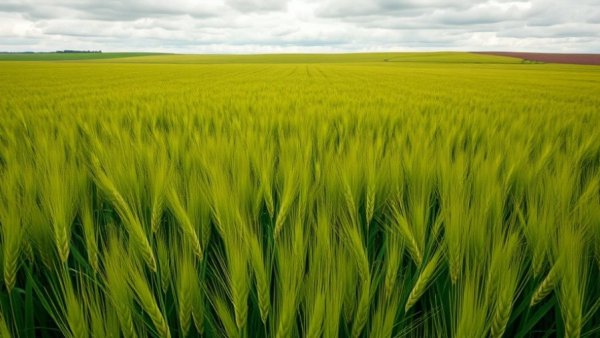
Understanding Barley's Role in Sustainable Agriculture
In the quest for sustainable agriculture, barley emerges as a vital player, particularly in regions like central and eastern China. Farmers are increasingly adopting double-cropping systems where barley is sown in autumn and harvested by late spring, followed by planting summer crops like rice. The success of this method hinges on the adaptability of barley to mature quickly enough to avoid unfavorable weather conditions later in the growing season.
Genetic Innovations in Barley
A groundbreaking study conducted by Ping Yang and a team of geneticists showcases the role of two critical genes—PHYTOCHROME C (PhyC) and VERNALIZATION 1 (VRN1). Together, these genes significantly influence barley's maturity rates. The PhyC gene, responsible for regulating flowering time via a light-sensitive receptor, combined with the winter barley variant of VRN1, enables barley to thrive under the tight schedules imposed by double-cropping systems. This genetic duet not only ensures earlier maturity but maintains grain yield, critical for sustaining farmers' livelihoods.
The Evolution of Barley Genetics
Since the 1940s, the genetic landscape of barley has shifted dramatically. Researchers found that while European barley varieties contributed enhanced yield and quality traits, they also introduced longer development periods that challenged traditional crop rotations. The study highlights how a favorable blend of the PhyC and VRN1 gene variants became prominent in Chinese breeding programs, showing an upward trend in their frequency since the 1960s. Today, over 60% of modern Chinese varieties carry this advantageous combination.
Implications for Future Agronomy
Base editing—a cutting-edge genome-editing technology—was employed to test the effects of these genetic changes on barley development time. This precise technique allows for targeted modifications to barley's DNA, potentially offering solutions as climate variability continues to challenge traditional farming methods. Aside from improving maturity rates, these advances reflect broader trends in biotechnology that can revolutionize agriculture by making crops more resilient to varying climates.
The Bigger Picture: Sustainable Practices and Food Security
Adapting barley for double cropping not only boosts efficiency but underscores the importance of sustainable farming practices in ensuring food security. The successful integration of early-maturing barley within cropping systems shows promise for other regions facing similar climate concerns. By continuing to innovate and embrace genetic advancements, farmers can enhance their productivity while minimizing environmental impacts.
As sustainable agriculture becomes more critical in our changing world, embracing genetic research like this study is key to fostering resilience in our food systems. It encourages us to think about the seeds we plant today for a sustainable tomorrow.





Write A Comment