
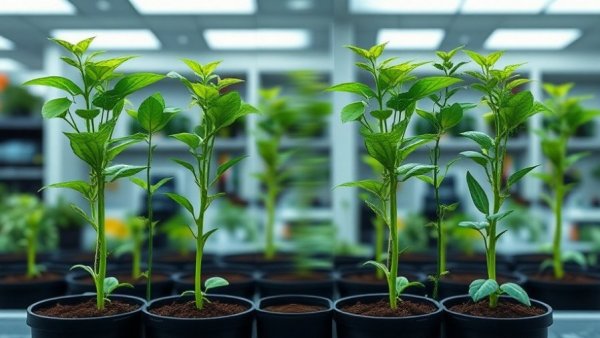
A Revolutionary Approach to Botanical Preservation
In a groundbreaking study at the University of Tartu, researchers have harnessed the simplicity of ordinary cameras to craft detailed, interactive 3D models of plants. This innovative technique not only revolutionizes how botanical gardens and museums document their living collections but also empowers these institutions to preserve biodiversity affordably. The research led by Toivo Aukusti Ylinampa and Urmas Kõljalg emphasizes how digital technology, especially photogrammetry, can bridge the gap between traditional plant documentation methods and the need for real-time, three-dimensional representations.
Understanding Photogrammetry: The Technology Behind the Magic
Photogrammetry allows researchers to reconstruct tangible 3D shapes from overlapping photographs, capturing the complex dimensions of plants that flat photos and pressed specimens fail to represent. By integrating this technique with 3D Gaussian splatting, the Tartu team achieved photorealistic models capable of handling intricate structures like tangled foliage. Their work has laid down a framework for botanical institutions, providing a practical guide for generating scalable 3D datasets.
The Impact of Environmental Factors
Despite the advancements, the researchers pointed out challenges, such as the adverse effect of wind on model quality. While the methodology demonstrates potential, external environmental factors highlight the need for controlled settings, especially for accurate measurements and data collection. Such insights shed light on the intricacies of working with living specimens and the factors affecting digital replication.
Empowering Institutions with Affordable Solutions
This research showcases an exciting future where botanical gardens and museums no longer need specialized systems to document their collections. By utilizing everyday cameras, these institutions can engage more effectively with visitors through interactive virtual walkthroughs—thus making the experience of exploring flora easier and more accessible to everyone.
Future Directions: What Lies Ahead?
As the study reveals, next steps include automating the stitching process for more efficient data gathering and independent validation for precise quantitative analyses. As this technology spreads, it could foster a new wave of conservation efforts, where every garden can become a digital hub of biodiversity.
Concluding Thoughts on the Value of Digital Twins
The potential of using digital twins in plant preservation is vast. By creating explorable, dynamic models, not only are we preserving plant diversity, but we are also paving the way for better educational resources in science and biology. This initiative exemplifies how accessible technology can inspire and facilitate meaningful conversations about our planet's precious living collections.




Write A Comment