
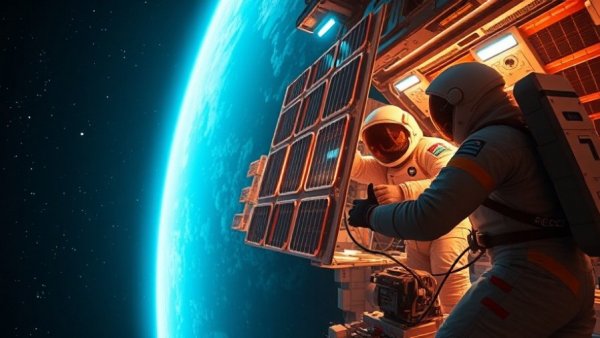
Historic Milestone: Completion of ISS Solar Array Deployment
On November 5, 2026, two astronauts made significant strides in enhancing the power capabilities of the International Space Station (ISS). Expedition 75 flight engineers Anil Menon from NASA and Joshua Kutryk from the Canadian Space Agency completed the installation of the eighth and final International Space Station Roll-Out Solar Array (iROSA), enabling the ISS to produce up to 30% more electricity. Menon joyfully announced, "We got it done!" as they concluded a robust 6-hour and 59-minute spacewalk.
Innovative Technology Drives Power Improvements
The iROSAs, which are compact and more efficient compared to their predecessors, reflect NASA's commitment to innovation in space technology. Each of these new solar arrays, only half the size of the original panels, has been designed to deliver 40% more power, signifying an engineering triumph as they extend the ISS’s operational lifespan. Previously, the original solar arrays had begun to lose efficacy after exceeding their 15-year design life, highlighting the urgency that brought about the integration of these cutting-edge solar technologies.
The Journey to Completion: A Collaborative Effort
This landmark achievement is the result of teamwork involving multiple astronauts since the inception of the iROSA project in June 2021. Menon and Kutryk's recent spacewalk furthered the efforts of previous teams who also played a vital role in deploying the arrays across different power channels. Each deployment reinforced the collaborative nature of space exploration and the shared responsibility in maintaining a sustainable presence in orbit.
Understanding the Technical Challenges
The path to successful deployment was not without challenges. During their spacewalk, Menon and Kutryk encountered a complication concerning the expected shunt current from the new array. NASA mission control, observing from afar, identified the issue that could jeopardize the deployment. The astronauts had to wait until the ISS entered the Earth's shadow to safely troubleshoot. This incident underscores the complexities involved in space operations and the precision required in handling high-stakes equipment.
Shaping the Future: Implications for ISS Operations
The successful completion of the iROSA installations allows the ISS to continue its vital research and international collaboration in space. With the station's operations planned to extend until its controlled deorbit in late 2030, having enhanced solar capabilities ensures that astronauts will be able to conduct meaningful scientific investigations without interruption. This extension is crucial as the ISS remains a key site for research that offers insights into the effects of long-term human spaceflight.
Celebrating Human Achievement in Space Exploration
This spacewalk marks the 101st U.S. extravehicular activity at the ISS since the retirement of the space shuttle program, exemplifying the dedication of astronauts who continue to push the boundaries of human capacities in space. Nichole Stilwell, the spacewalk officer, encapsulated the essence of the moment by applauding the astronauts for showcasing the best of humanity under challenging conditions. As we reflect on this milestone, it’s essential to recognize the broader implications of such achievements in inspiring future generations towards innovation in space exploration.



Write A Comment