
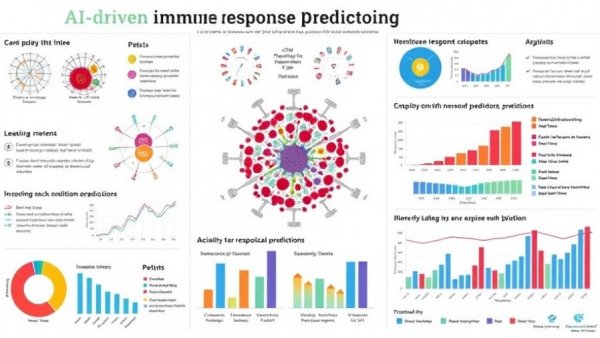
Revolutionizing Immunology with AI: AlphaFold's Breakthrough
Researchers at the Translational Genomics Research Institute (TGen) are harnessing the power of artificial intelligence to dive deeper into the mysteries of the immune system. With AlphaFold 3, they are taking a significant leap in understanding how our body recognizes and reacts to various threats—from stubborn viruses to tumors. Unlike anything seen before, this innovative approach suggests that we can move beyond random guesses to precise predictions about immune responses, simply by analyzing genetic sequences.
Understanding the Immune Triad: MHC, Peptide, and TCR
To comprehend how AlphaFold 3 operates, it helps to know about the immune triad. An efficient immune response relies on a trio of molecules: the Major Histocompatibility Complex (MHC), a peptide that serves as a marker of invaders, and a receptor from T cells known as the T Cell Receptor (TCR). When an MHC molecule speaks to T cells by displaying pathogen fragments, the T cell can confirm if the fragment matches and launches an immune attack if it does. This complex, known as the MHC:peptide:TCR complex, is crucial for the body’s ability to fight off infections and cancer.
The Power of AlphaFold 3: Redefining Structural Biology
AlphaFold 3 is a revolutionary tool in biotech that predicts the three-dimensional structures of proteins from genetic sequences. Since its introduction in 2024, it has reshaped the landscape of structural biology, particularly in modeling intricate multi-molecular interactions like the MHC:peptide:TCR complexes. John Altin, Ph.D., a key researcher in this study, highlights that previously, knowing whether a TCR was specific to a target antigen felt like a "roll-of-the-dice" scenario. With AlphaFold, they can now approach predictions with confidence, moving beyond mere chance.
Real-World Applications: Accelerating Immune Response Understanding
The implications of this technology for public health and disease responses are enormous. With rapid predictions of which T cell receptors can recognize specific pathogens, scientists can quicker decode immune responses to infectious diseases or cancer. This not only enhances research capabilities but also accelerates vaccine development and personalized medicine strategies, which can lead to tailored treatments for individuals based on their unique genetic makeup.
Future Insights: A World with Smarter Immunity
As AlphaFold continues to evolve, so does the potential for groundbreaking advancements in immunology. The accuracy of its predictions may improve, allowing for even more complex interactions to be examined. This could potentially lead to next-generation therapies and preventive approaches that were previously unthinkable. Imagine a time when we can predict our immune system’s weaknesses to better protect against emerging health threats!
The ongoing developments in AI-driven biology showcase the extraordinary intersection of technology and healthcare, offering a brighter future where real-time responses to health threats could change how we approach disease management. The journey of AlphaFold is just beginning, and its impact on biology is poised to shape the future of medicine significantly.




Write A Comment