
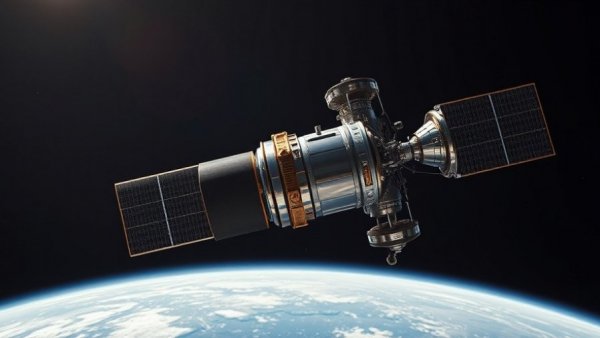
Pioneering Space Innovation: Hubble's Future in Jeopardy
NASA is reigniting discussions aimed at rescuing the beloved Hubble Space Telescope, which has been a cornerstone of astronomical discovery since its launch in 1990. Operating at capacity but facing an eventual reentry into Earth's atmosphere in approximately six years, this historic observatory remains a beacon of scientific inquiry and public fascination. With a recent request for information (RFI) issued on October 29, NASA is seeking innovative solutions for 'in-space servicing' that could either boost Hubble's degrading orbit or enhance its operational capabilities.
A History of Achievement
The Hubble Space Telescope has profoundly impacted our understanding of the universe, contributing to groundbreaking discoveries such as the realization that the expansion of the universe is accelerating — a finding that earned the Nobel Prize in Physics. Since its inception, the telescope has produced around 23,000 scientific papers, underscoring its crucial role in modern astronomy. Every year, the demand for observation time greatly exceeds availability, highlighting Hubble's continued significance in the scientific community.
Exploring Innovative Solutions
Various proposals have previously attempted to salvage Hubble's legacy. In 2022, billionaire entrepreneur Jared Isaacman suggested a mission using SpaceX technology to service the telescope. Although NASA declined due to concerns over potential risks, recent leadership changes and a new perspective from Isaacman, now NASA's administrator, may open up new opportunities. In an October 30 statement, he emphasized the importance of exploring all 'reasonable opportunities' to ensure Hubble's longevity, especially when considering cost-effectiveness against launching new missions.
Potential Pathways and Challenges
The current RFI also includes scenarios for Hubble's end of life, such as a controlled reentry into Earth's atmosphere. Given the telescope's impending atmospheric reentry around 2033 or 2034, NASA faces a tight window for any potential intervention. It's notable that earlier this year, NASA collaborated with Katalyst Space Technologies on a $30 million mission to boost the orbit of the Neil Gehrels Swift Observatory. Unfortunately, the mission encountered control issues, which serves as a reminder of the complexities involved in such tasks.
The Value of Hubble: A Shared Sentiment
The Hubble Space Telescope is not only a scientific instrument but also a cultural icon. Its stunning images of celestial phenomena, like the 'Pillars of Creation' in the Eagle Nebula, have captured the public’s imagination and become part of our collective consciousness. This appreciation underscores the importance of ensuring the telescope continues to operate for as long as possible. With the heart of space exploration and support from various stakeholders, the future of Hubble remains a matter of public interest and scientific importance.
As NASA navigates these discussions, the agency reminds us that Hubble's legacy stands as a testament to human innovation and the pursuit of knowledge. The coming years could reshape our understanding of the universe further, depending on how we, as a global community, prioritize the preservation of such monumental achievements in space exploration.




Write A Comment