
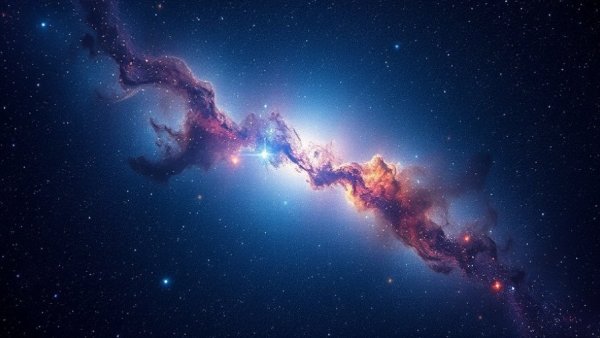
The Mysterious RGB Luminosity Bump in Aging Stars
Stars are often perceived as stable cosmic giants, shining steadily over billions of years. However, as they transition into their later stages, even these celestial bodies exhibit unexpected phenomena. One such enigma arises in aging red giant branch (RGB) stars, where a sudden dip in luminosity, known as the RGB luminosity bump, has baffled astrophysicists for quite some time. New research sheds light on this perplexing occurrence, exploring why these stars momentarily dim amidst their progression towards increased brightness.
Understanding Stellar Evolution from Hydrogen to Helium
As low-mass stars like our sun exhaust their hydrogen fuel, they embark on a remarkable transformation. They swell into red giants, gradually increasing their luminosity and decreasing their surface temperature. During this evolutionary journey, most RGB stars follow a predictable trajectory, consistent with theoretical models. Yet, the RGB luminosity bump interrupts this seemingly smooth progression. Astrophysicist Saskia Hekker's recent study highlights that while the bump is supported by observational data, there exists an inconsistency: theory suggests it arises at higher luminosities than observed, drawing researchers' attention to further investigations.
Bridging the Gap Between Theory and Observation
The gap between theoretical predictions and observational findings arises from the complex physics governing stellar structures. RGB stars are not single-stream objects; they are layered entities. Unlike similar low-mass stars, RGB stars have already depleted their hydrogen reserves. Thus, this unique internal stratification may play a vital role in determining how the RGB luminosity bump manifests. Understanding these dynamics is essential to clarify why the predicted timing differs from what we see in reality.
Implications for Astrophysics and Beyond
This research holds broader implications not only for stellar evolution theories but also for our understanding of the universe. As astrophysicists delineate the processes governing star life cycles, it enriches our knowledge of how various celestial bodies interact and evolve over extensive timescales. Each finding surrounding the RGB luminosity bump informs capabilities in predicting stellar behaviors, which in turn contributes to our comprehension of cosmic events influence the stability of galaxies.
Conclusion: The Endless Quest for Understanding
With technology continually advancing, researchers find themselves equipped with new tools to dissect complex astronomical phenomena. Insights into the RGB luminosity bump act as a cornerstone for those intrigued by astrophysics. As we peer deeper into the ether, the age-old quest for understanding the cosmos persists. Anyone captivated by space exploration and the mysteries of stellar evolution should be encouraged to follow advancements in this domain, as they can profoundly influence our perspective of the universe.




Write A Comment