
Transforming AI Deployment: The New Era of Observability
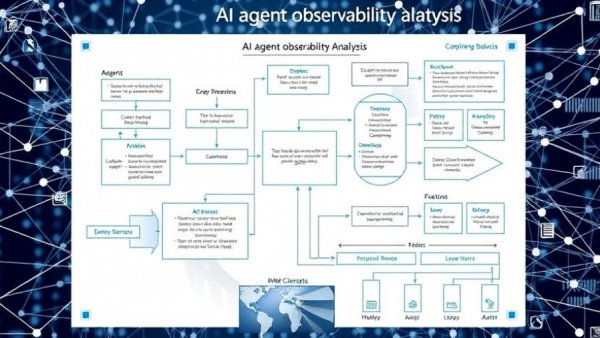
As companies transition from using AI agents as mere prototypes to fully operational entities, critical questions arise regarding their performance, operational costs, and data interactions. Google has stepped up to the plate, unveiling cutting-edge capabilities for AI agent observability and evaluation across its Data Cloud. This comprehensive approach is designed to provide businesses with the necessary insights to optimize their AI solutions effectively.
Understanding the Need for Observability in AI
The deployment of AI agents encompasses more than initial implementation; it involves a continuous understanding of how these agents function—what data they access, how much it costs to run them, and how accurately they perform their tasks. With the expanded capabilities of Google’s Data Cloud, organizations can effectively monitor both first-party (1P) and custom third-party (3P) AI agents, thereby addressing crucial operational challenges.
Key Enhancements in Agent Monitoring
The Google Data Cloud's new unified telemetry framework provides businesses with critical information on agent performance, usage, and expenditures:
- Data Capture: For both first-party data agents and custom-built solutions, there is now seamless telemetry capture. This feature allows companies to automatically gather performance data from conversational agents with minimal setup required.
- Centralized Data Storage: All captured telemetry is securely stored within BigQuery, empowering organizations to manage and audit logs effectively. This means that businesses can easily access insight traces, making meaningful data decisions simpler than ever.
- Ease of Analysis: The new dashboards in BigQuery and Looker provide powerful analytics, allowing teams to visualize agent activity, monitor usage trends, and optimize performance based on real-time feedback.
Exploring the Potential of AI and Machine Learning
The enhancements brought forth by Google’s new observability features not only streamline operations but also open doors for deeper exploration of AI and machine learning capabilities. For example, organizations can utilize real-time analytics to fine-tune the algorithms that power their AI agents, ensuring their reliability and efficiency. By understanding where agents excel and falter, companies can make informed adjustments to system prompts and schemas—ultimately elevating user experience and engagement.
The Future Landscape of AI Deployment
As AI technology continues to progress, the importance of observation and governance will increase. With the evolving complexities of AI systems, the integration of robust monitoring practices will become essential. Future innovations may even lead to automated improvements in AI decision-making processes, driven by data analytics tools like those offered by Google. Organizations must act now to grasp these emerging tools, positioning themselves as leaders in the AI domain.
Conclusion: The Call to Action
As businesses embrace the transformative power of artificial intelligence and machine learning, understanding the landscape of AI deployment through observability is crucial. The future relies on precise data insights and AI governance. Companies should take advantage of tools like Google Data Cloud to refine their AI operations, ensuring that they are not just deploying AI agents but are doing so with the utmost efficiency and effectiveness.



Write A Comment