
Revolutionizing Language Modeling: The Promise of Reservoir Computing
Language models have significantly shaped the field of natural language processing (NLP), allowing machines to understand and generate human-like text. However, most of these advancements stem from transformer architectures, which, while powerful, are resource-intensive and often impractical for environments where computational power is limited. Research from Saitama University introduces an exciting alternative using reservoir computing, offering a glimpse into a more efficient future for AI applications.
Understanding the Basics: What is Reservoir Computing?
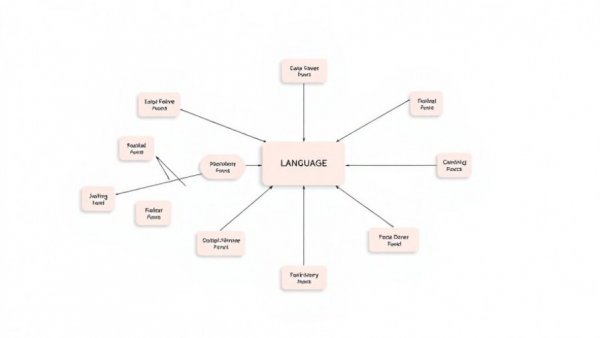
Reservoir computing is a paradigm that utilizes a fixed recurrent neural network (the reservoir) to capture dynamic behaviors of inputs while only requiring lightweight components to be trained for output. This distinct method contrasts with traditional training of neural networks, where all components are adapted simultaneously, making it a potential game-changer for systems with limited computational resources.
Exploring the Experiment: A Comparative Study of Architectures
The innovative study led by Professor Atsushi Uchida and researcher Felix Köster compared three key models: the traditional reservoir computer, an enhanced version that incorporates attention mechanisms (AERC), and the well-known transformer architecture. Through their experiments using an extensive Shakespeare text corpus for character-level prediction, the researchers discovered that reservoir computing could not only compete with existing models in predictive performance but also significantly lower the computational requirements.
Trade-offs in Predictive Performance
As a central finding, the researchers acknowledged the trade-off between prediction quality and computational efficiency. Their extended architecture, dubbed layered attention-enhanced reservoir computing (LAERC), showcases a model that balances these two aspects effectively. While the traditional transformer showed the best performance with a test loss of 1.67 in character prediction tasks, the reservoir computer followed closely with a test loss of 1.81, highlighting the potential of reservoir models.
The Evolution of Token-Level Modeling
This research also marked a significant advancement by extending reservoir computing to larger token-level language modeling, demonstrating its versatility and power for future AI applications. The experiments revealed that not only can reservoir architectures match traditional models on performance, but they do so with greater computational efficiency. This could play a crucial role in deploying language models in practical applications ranging from mobile devices to embedded systems.
A Glimpse Into the Future of AI
The implications of this study are profound. As AI continues to infiltrate various sectors, the demand for more efficient models becomes ever more pressing. The findings from Saitama University provide an optimistic perspective on the future of language modeling, where efficiency does not come at the cost of performance. If reservoir computing is further developed, it could lead to breakthroughs, making AI more accessible and sustainable, especially in resource-constrained environments.



Write A Comment