
Unveiling Mars: The Significance of Volcanic Activity
Recent observations from the European Space Agency's ExoMars Trace Gas Orbiter (TGO) have revealed tantalizing hints that Mars may not be the dormant planet previously imagined. Instead, evidence points to active geological processes beneath the Martian surface, particularly around the Alba Mons volcano. This finding could alter our understanding of Mars and its potential for past or even present life forms.
Fresh Evidence from the ExoMars Trace Gas Orbiter
The TGO, operating since 2016, has been instrumental in detecting trace gases in the Martian atmosphere. Its latest discovery of hydrogen chloride, a gas often associated with volcanic activity on Earth, suggests that there may be hot magma lurking beneath the surface of Mars. This discovery was particularly noted during early summer in the Martian northern hemisphere, a season when the gas typically should be absent, pointing to possible ongoing volcanic processes.
What the Findings Mean for Mars Exploration
Understanding the volcanic activity on Mars is crucial for several reasons. First, it provides insight into the planet's geological history and its internal processes. The presence of volcanic gases can inform scientists about the presence of liquid water, a vital component for life. As Daniel Mège, a key researcher in the study, states, "Our findings suggest that Mars has retained enough internal heat to support volcanic activity until recently." This claim is groundbreaking as it challenges the idea of a completely lifeless planet.
Mars Volcanism: A Closer Look at Alba Mons
Alba Mons is one of the most significant volcanoes on Mars, standing over 7 kilometers high. Previous studies using orbital imagery indicated some volcanism within the last few million years; however, the absence of direct observational evidence of lava flows or eruptions meant many scientists remained skeptical about its activity. With fresh fissures indicating gas escape, the findings urge scientists to reassess what we know about Martian volcanoes. The fact that seasonal water cycles may influence gas emissions adds another layer of complexity to ongoing investigations.
Exploring Further: Implications for Life on Mars
The detection of gases associated with volcanic activity raises questions about the environment on Mars. Could these areas provide more habitable conditions than previously thought? The potential for life, whether past or present, is of great interest for both scientists and enthusiasts. With the capabilities of modern spacecraft and landers, we can begin to search for signs of life, past microbial activity, and even analyze the soil and atmosphere in regions around these volcanic fissures.
The Future of Mars Exploration
As research continues to unfold, the implications of volcanic activity on Mars will become increasingly clear. The upcoming missions planned by NASA and other space agencies to Mars include the Mars Sample Return mission which will further investigate these areas. As scientists learn more about the potential for ongoing volcanic activity, they will be better equipped to understand what Mars' climate and geological history reveal about its capacity to support life.
Visual Insights into Mars’ Mysteries
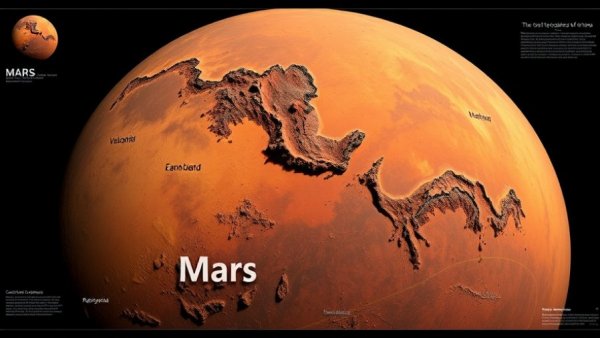
The images taken by TGO, particularly the ones focusing on the fissures and gas emissions, are invaluable in our understanding of the Martian landscape. They not only provide visual context but also spark the imagination regarding what lies beneath the surface of this neighboring planet. The technology used by instruments like TGO can shed light on terrains across the solar system, enriching our quest to uncover cosmic mysteries.





Write A Comment