
Revolutionizing Crop Science: New Advances in Genome Editing
As agriculture faces the challenges of climate change, population growth, and food security, scientists are continuously seeking innovative solutions to enhance crop resilience and productivity. A recent study led by Gao Caixia from the Institute of Genetics and Developmental Biology at the Chinese Academy of Sciences marks a significant advancement in this endeavor, introducing a comprehensive workflow for programmable chromosome editing in plants.
Understanding Programmable Chromosome Engineering
The newly published protocol in Nature Protocols outlines a detailed experimental workflow capable of precise manipulation of chromosomal DNA. This method empowers researchers to achieve targeted insertions, deletions, inversions, and translocations at scales from kilobases to megabases. With its potential applications in biotechnology, this innovation underscores the crucial role of genetic engineering in modern agriculture.
Recent pan-genomic studies have highlighted the importance of large-scale structural variations in shaping the genetic diversity of crops. Consequently, the ability to manipulate these structural aspects can lead to the development of new varieties better suited to environmental challenges.
The Science Behind the Breakthrough
Central to this new workflow is the use of site-specific recombinases (SSRs), which facilitate the exact recombination of substantial DNA fragments. Although previous applications of SSRs faced limitations, this groundbreaking research advances their programmability and efficacy. The research team effectively redesigned the recombinases, enhancing their activity while ensuring that residual recombination sites are eliminated—making the editing cleaner and more efficient.
Step-by-Step Progression: From Design to Plant Production
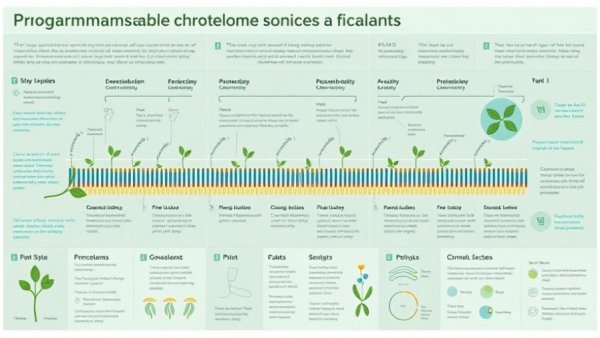
The workflow comprises a three-stage process that takes researchers from in-silico design through to validated plant lines. First, design tools are utilized to create specific pegRNA sequences for targeting recombination sites. Second, validation strategies involve assembling expression vectors and quantifying editing efficiency through next-generation sequencing.
Finally, the plant production phase capitalizes on established techniques like Golden Gate cloning for transformation, streamlining the process and ensuring rapid results. Within just a few months, researchers can expect to obtain edited plants, significantly shortening the timeline typically associated with genetic modifications.
Broader Implications and Future Perspectives
This innovative workflow not only enhances the speed and accuracy of plant editing but also serves as a benchmark for future advancements in related editing tools. With biotech continuing to evolve, the modular design of this workflow can adapt to incorporate emerging technologies in genome manipulation.
Why This Matters
As urban populations grow, effective crop management and the ability to innovate in agriculture become ever more critical. This research underlines the potential impact of biotechnology on food systems, promising to revolutionize the way we develop and cultivate crops. By understanding the genetics behind these advancements, we can better appreciate the responsibilities and ethical considerations that accompany biotechnological innovations.
For those interested in sustainable living and agricultural advancements, this breakthrough brings hope for a resilient future in crop production—where science not only meets necessity but also harnesses nature’s capabilities for the greater good.





Write A Comment