
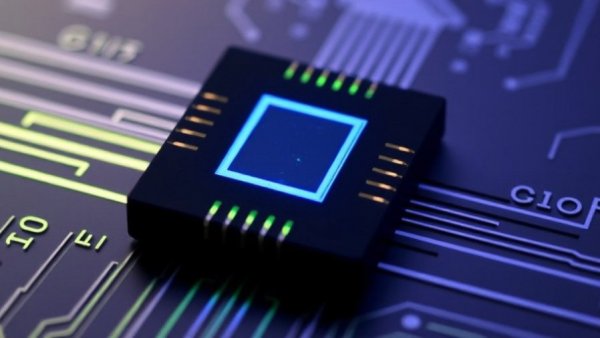
Revolutionizing Quantum Computers with Miniature UV Light Sources
Researchers at Harvard University have made a significant leap in quantum computing technology with their latest innovation: a microscopic device that generates 120 times more ultraviolet (UV) light than previous attempts. This breakthrough, using a material known as thin-film lithium niobate, could lead to smaller, more efficient quantum computers, ultra-precise atomic clocks, and compact environmental sensors. The implications of this work could not only transform quantum technologies but also pave the way for new applications in various sectors, including healthcare, telecommunications, and environmental monitoring.
The Importance of Ultraviolet Light in Modern Technology
Ultraviolet light has a myriad of applications in contemporary industries. It is widely utilized for disinfecting surfaces, making biological elements fluoresce, and manufacturing computer chips through a process known as photolithography. In today's world, especially in light of the recent global health crises, the use of UV light in disinfection has gained renewed attention. Furthermore, its ability to enhance imaging techniques in biomedical research makes it invaluable for scientists and medical professionals alike. However, traditionally dependent on larger sources, the ability to generate compact UV light sources integrated directly into photonic chips could revolutionize how quantum technologies are developed, potentially leading to new applications that were previously unimaginable.
A Hidden Challenge: Optical Losses in Tiny Devices
One of the significant challenges researchers face is that ultraviolet light diminishes in power when traveling through optical waveguides—tiny channels that transport light on chips. This limitation has previously rendered the creation of tiny UV sources difficult. The Harvard team's novel approach effectively circumvents this problem, demonstrating that lithium niobate can generate significant UV output while minimizing optical losses. By creating an efficient pathway for the UV light to travel, the team managed to maximize the potential of this tiny source, which could ultimately lead to more powerful and functional quantum devices.
Turning Red Light Into Ultraviolet Light: The Mechanics Behind the Breakthrough
The newly developed device employs a technique known as frequency upconversion. It works by converting two photons of red light into a single photon of UV light, effectively increasing energy levels. Lithium niobate's unique properties make it an ideal candidate for this application; due to its transparency and ability to handle various wavelengths, it stands out among alternatives. "When people think about [thin-film lithium niobate], they often overlook its potential as a UV material, but we show that it can perform exceptionally well in this area," explained co-first author Kees Franken. This innovative process not only highlights the versatility of lithium niobate but showcases the ingenuity of the researchers in overcoming traditional limitations in UV light generation.
High-Precision Manufacturing: Overcoming Engineering Barriers
In addition to the scientific breakthrough, the researchers also tackled a significant engineering hurdle associated with the manufacturing process of the device. To achieve perfect conversion of red light to UV, the orientation of regions in the crystal must be reversed at precise intervals within the waveguide. This complex technique, known as poling, presents its challenges, especially on a microscopic scale. The success of the Harvard team in creating these intricate patterns could pave the way for more efficient manufacturing of advanced photonic devices. This achievement not only reflects their technical prowess but also highlights the importance of collaboration among scientists, engineers, and manufacturing specialists in solving multifaceted problems.
Applications and Implications for Quantum Computing
The implications of Harvard’s advancements extend far beyond mere technical prowess. If miniature UV light sources can be reliably incorporated into quantum computers, they could enable unprecedented speeds and efficiencies in processing information. Quantum computers rely on qubits, which utilize quantum states for computation, requiring precise manipulation and control through light. As quantum computing continues to mature—ushering in a new era of computation capable of solving problems beyond the grasp of classical computers—the ability to create smaller, more powerful devices becomes paramount. This technological evolution attracts the attention of investors and governments, signaling a significant shift in how computation could impact industries like finance, pharmaceuticals, and artificial intelligence.
Looking Ahead: The Future of Quantum Technologies
The research foreshadows future innovations where tiny photonic devices play a crucial role in the next wave of technology. With industries increasingly seeking compact, powerful solutions—from environmental sensing to quantum information processing—the findings from this Harvard research signify a step towards a more integrated technological landscape. The quest for smaller and more efficient devices is constant, as companies look to enhance performance while minimizing space and costs. As such, the potential applications of these UV light chips are extensive and could influence future product designs and technology strategies worldwide.
Challenges Ahead: Scaling and Integration
While the advancements made by the Harvard team are promising, challenges remain in scaling and integrating these tiny UV light sources into a broader range of applications. Developing devices that can function reliably in real-world conditions is critical for this technology to be adopted en masse. Moreover, researchers will need to ensure that these devices can be produced economically to facilitate widespread use across various industries. As these challenges are addressed, the excitement surrounding quantum technologies will likely increase, propelling further research and investment into this revolutionary field.
Conclusion: Why Understanding This Breakthrough Matters
As we continue to explore the capabilities of quantum computing, understanding the advancements in miniature UV light generation is essential. These developments not only represent progress in a scientific context but also have the potential for profound impacts across multiple fields. To stay updated on the exciting developments in quantum technologies and their implications, it's crucial for tech enthusiasts, industry professionals, and researchers alike to follow these innovations closely. The intersection of light, materials science, and quantum computing stands as a testament to humanity's quest for knowledge and progress, encouraging future generations to think creatively about the challenges that still lay ahead.





Write A Comment