
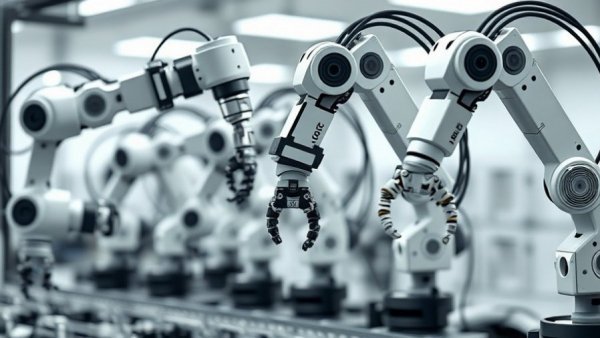
Introducing Agentic Robotics: A New Era for Robots
In recent months, artificial intelligence (AI) agents have begun reshaping various sectors, from online shopping to cyberattacks, yet the field of robotics is poised for the most transformative shift yet with the concept of agentic robotics. Researchers at UC Berkeley, led by the visionary Ken Goldberg, have developed this innovative approach capable of not just crafting robotic code but refining it through simulated environments before real-world deployment.
The Unique Power of Simulation
The cornerstone of this agentic robotics breakthrough lies in the ability to leverage AI agents that can reason, plan, and utilize tools to tackle multistep tasks. This enables teams to simulate and evaluate robot-control programs without the need for extensive physical resources, significantly alleviating the burdens tied to traditional methods. As Ken Goldberg notes, this technique offers a monumental shift from previous methods, allowing for quicker, more efficient testing and refinement.
Bridging the Robotics Data Gap
Traditionally, two primary methodologies have defined the landscape of robotics development: model-based and model-free robotics. Model-based robotics depends heavily on programming detailed behaviors through extensive engineering, while model-free relies on vast amounts of data collected for imitation learning. Goldberg's team has identified a critical obstacle—a "100,000-year data gap"—making it impossible for robots to gain skills quickly enough to compete with AI's rapid advancements in language fluency.
The agentic robotics approach addresses this challenge by fabricating enriched environments where AI agents can learn, test, and improve continuously, thus circumventing the enormous data collection phase.
Practical Applications and Future Prospects
The implications of this research extend beyond academia; industrial applications of agentic robotics could revolutionize factory automation, autonomous vehicles, and even healthcare robotics. The use of open-source code and standardized benchmarks allows global developers and researchers to collaborate, further accelerating innovation in the field. By quickly developing and iterating upon robot behaviors in virtual spaces, these advancements promise to keep pace with the rapid evolution of AI today.
Concluding Thoughts
As artificial intelligence continues to break new ground, the symbiosis with robotic functionalities heralds a promising future. With agentic robotics, we may witness a new era where robots not only mimic human behavior but adapt autonomously to their environments, improving efficiency, reliability, and overall performance. The next few years are set to be pivotal, and stakeholders in technology, industry, and even policy must closely observe these developments.



Write A Comment