
The Cosmic Merger: Big Bao and Little Bao
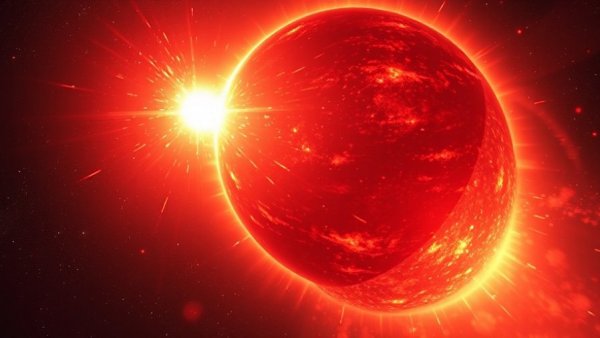
Astronomers recently witnessed a dramatic cosmic event in the Andromeda galaxy, where a red giant star, affectionately nicknamed Big Bao, consumed its smaller companion star known as Little Bao. This stellar cannibalism, designated AT2025abao, provides a fascinating glimpse into the lifecycle of stars. Big Bao, a massive star 350 times the size of our sun, expanded so much that it engulfed Little Bao, showcasing the chaotic dynamics that govern celestial interactions.
Tracking a Cosmic Phenomenon: The Role of Advanced Telescopes
The detection of this event was no small feat. Ground- and space-based telescopes, including the James Webb Space Telescope (JWST) and NASA's NEOWISE and SPHEREx missions, played crucial roles in uncovering the details of this rare stellar merger. For the first time, astronomers captured continuous observations leading up to the eruption, which marks a significant advance in understanding the processes involved in such stellar events. As noted by Viraj Karambelkar of Columbia University, researchers were astonished by the clarity of the data collected, giving them an unprecedented look at the conditions preceding a stellar explosion.
Understanding the Stellar Lifecycle and Its Implications
Big Bao, which has orbited for thousands of years, exhibited unusual behavior years before the merger. Its gradual brightening, triggered by internal changes as it neared the end of its life, contrasts sharply with typical stability seen in stars of its size, leading experts to revise existing models of stellar evolution. The implications of this event extend beyond mere curiosity; they challenge pre-existing beliefs about how stars interact and evolve toward their explosive ends.
The Science of Stellar Explosions: A Growing Field of Study
The extraordinary speed at which material was ejected from the newly merged star followed the cannibalization event, reaching approximately 1.8 million miles per hour. This fantastic velocity provides significant clues regarding the violent and chaotic environments that exist in a star's final stages. The JWST captured essential post-merger data showing that Big Bao cooled and expelled gas and dust in the lead-up to its eruption, highlighting the star's dynamic changes as it incorporated Little Bao.
Future Implications for Astronomy
The findings regarding AT2025abao emphasize the importance of ongoing astronomical observation. As technology in telescopes and observational techniques improve, astronomers anticipate discovering more about the evolutionary paths stars take, culminating in explosive events. These advances will not only enrich the field of astrophysics but may also shed light on how such cosmic phenomena impact the surrounding space environment.
The mystery of this cosmic collision illustrates the endless wonders that space has to offer, as well as the innovation needed to explore them. Despite the vast challenges posed by observing distant events, each discovery is a stepping stone toward understanding the universe's complexities. The insights gained from AT2025abao serve as a reminder of the delicate balance present in cosmic life and death, stimulating curiosity and engagement with the universe beyond our blue planet.




Write A Comment