
AiTechDigest
update
AI Tech Digest
AiTechDigest
update
  • Home
  • Categories
    • AI & Machine Learning
    • Future Technologies
    • Tech Industry News
    • Robotics & Automation
    • Quantum Computing
    • Cybersecurity & Privacy
    • Big Data & Analytics
    • Ethics & AI Policy
    • Gadgets & Consumer Tech
    • Space & Aerospace Tech
  • All Posts
  • AI & Machine Learning
  • Future Technologies
  • Tech Industry News
  • Robotics & Automation
  • Quantum Computing
  • Cybersecurity & Privacy
  • Big Data & Analytics
  • Ethics & AI Policy
  • Gadgets & Consumer Tech
  • Space & Aerospace Tech
March 27.2025
2 Minutes Read

Ukrainian F-16s Are Spying on Russian Air Defenses: What It Means

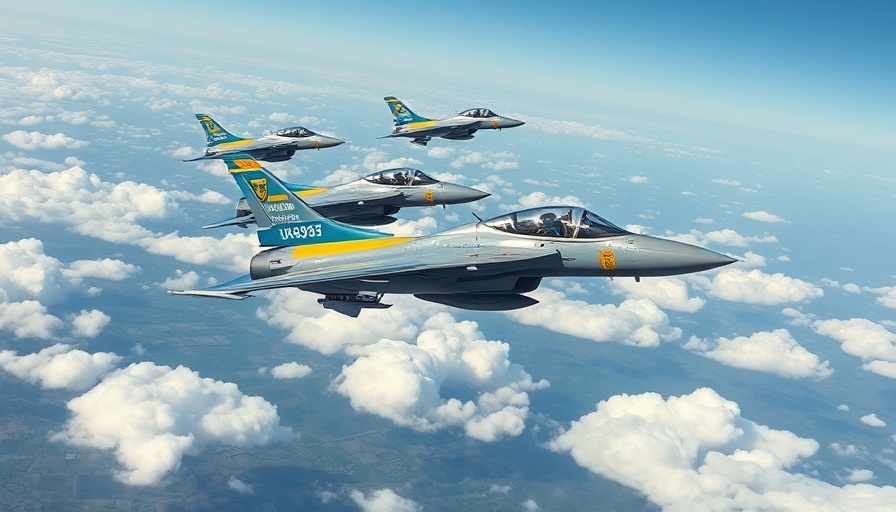
Ukrainian F-16s conducting reconnaissance over landscape.

Ukrainian F-16 Fighters: A New Frontier in Aerial Intelligence

The warfare landscape is rapidly changing, and the recent deployment of Ukrainian F-16s has offered a glimpse into the innovative use of military technology in modern combat. Flying sorties from small airstrips, these fighters are proving to be a powerful asset, effectively combining offensive operations with intelligence-gathering missions. With their ability to shoot down drones, jam enemy radars, and conduct reconnaissance, the F-16s have not only displayed their lethality but also their versatility in aerial intelligence.

Reconnaissance Without Specialized Equipment

Interestingly, the Ukrainian F-16s, while equipped with electronic warfare systems, have yet to utilize advanced reconnaissance pods that other nations employ. Instead, they rely on their onboard self-protection systems which help to identify Russian air defenses without specialized reconnaissance equipment. An anonymous pilot hinted at the operational effectiveness of this system, noting that they often fly reconnaissance missions to gain a tactical advantage. This adaptability highlights an important trend in military logistics where cutting-edge technology meets pragmatic battlefield strategies.

The Playback of Real-Time Tactical Information

With situational awareness being key to modern combat, Ukrainian pilots now utilize advanced electronic warfare management systems. These systems not only provide navigation support but also relay essential intelligence regarding enemy radar locations directly to the cockpit, allowing for better-informed tactical decisions. Such integration of technology signifies a shift towards dynamically responsive warfare, where the collection and analysis of data is conducted in real-time.

The Bigger Picture: Intelligence and Modern Warfare

The implications of these developments extend beyond the battlefield. As nations increasingly invest in advanced aerial technologies and electronic warfare capabilities, the international military landscape is evolving. A joint focus on intelligence gathering alongside combat capabilities can redefine how wars are fought. The continued success of technologies like the F-16s will not only influence current conflicts but will also shape future defense strategies globally.

Conclusion: A Call to Stay Informed

As the situation in Ukraine unfolds and technology reshapes warfare, it is critical for observers and policymakers to monitor these advancements closely. Understanding how air power is evolving can lead to better strategies and potential adaptations for both defense and technological industries.

Space & Aerospace Tech

11 Views

0 Comments

Write A Comment

*
*
Please complete the captcha to submit your comment.
Related Posts All Posts
07.07.2026

Turkey's Air Defense Strategy Shifts Away from Russian S-400: What Lies Ahead?

Update The Evolution of Turkey's Air Defense Landscape Turkey is charting a significant course in its air defense strategy, moving away from reliance on the Russian S-400 missile system. This shift reflects Turkey's desire to modernize and integrate more sophisticated western technology into its defense framework, emphasizing NATO interoperability and reducing dependence on a contentious ally. Emerging Technologies in Aerospace Defense The abandonment of the S-400 comes at a pivotal moment as Turkey seeks alternatives in its air defense systems. The deployment of indigenous technologies, like the HİSAR air defense systems, represents a commitment to bolster its national security while promoting domestic capabilities. This move not only enhances military readiness but sets the stage for Turkey to potentially export advanced defense technologies to other nations. Future Implications for NATO Relations By eliminating the S-400 from its arsenal, Turkey is signaling a willingness to strengthen ties with NATO allies. This shift may lead to increased collaboration on defense projects, aligning Turkey more closely with Western military objectives. It raises the question of how such decisions will influence the geopolitical landscape and Turkey's role within NATO moving forward. Defining the Future of Air Defense As Turkey evolves its air defense strategies, other nations will be watching closely. The implications extend beyond regional security, impacting global aerospace dynamics. Countries aiming to enhance their defense systems may look to Turkey's advancements as a model for integrating complex technologies in an era where autonomous and AI-driven systems dominate the battlefield.

07.07.2026

The Square Kilometre Array Could Transform Our Space Exploration for Alien Life

Update The Groundbreaking Square Kilometre Array: A New Era for Alien Life Search Imagine a vast network of telescopes, stretching across two continents, poised to explore the universe for signs of life beyond Earth. This is the promise of the Square Kilometre Array (SKA), designed to revolutionize our search for extraterrestrial intelligence (SETI). With a potential to observe a wider range of frequencies and collect unprecedented data, the SKA is more than just a telescope; it represents a leap forward in our ability to understand our place in the universe. Unprecedented Capability in the Search for Extraterrestrial Signals Previously, SETI has been limited to searching for narrow signals, primarily looking for intentional transmissions sent by advanced civilizations. The SKA, however, significantly widens the net. According to experts, just an hour of observing time with the SKA could detect signals from a modern mobile phone network on an exoplanet located four light-years away. This capability could help unlock mysteries of the cosmos that have long eluded us. Piggybacking on Existing Technology: Efficiency in Data Collection The SKA's design allows SETI researchers to utilize data from other astronomical observations efficiently. By piggybacking on existing surveys, such as the study of supernovae or bright radio galaxies, researchers can sift through signals without needing dedicated telescope time, which is often highly sought after and competitive. This collaborative approach leverages the wealth of information the SKA will gather, making the search for life both resource-efficient and promising. The Role of AI in Signal Identification One of the most innovative aspects of using the SKA is the application of artificial intelligence (AI) to filter out human-made radio frequency interference. As we search for signals from light years away, distinguishing these faint echoes from Earth-based noise becomes crucial. AI algorithms can be trained to recognize complex patterns, enhancing our ability to identify potential alien signals among the vast amount of data collected. Future Implications: A Data-Driven Understanding of Our Universe The SKA's operational data will not just consolidate our search for intelligent life; even a lack of evidence will yield significant scientific insights. As scientists collect and analyze the data, they will be able to refine their understanding of the universe's conditions, the formation of planets, and perhaps the evolution of intelligence itself. Whether we find clear signals or not, the knowledge gained will contribute immensely to the fields of astronomy and astrophysics. Conclusion: The World Awaits the SKA's First Signals The excitement surrounding the SKA signals a renewed commitment to understanding our universe and our potential cosmic neighbors. As technology evolves, so does our capability to explore the unknown, heightening curiosity about the existence of life beyond our blue planet. With the SKA, we stand on the brink of what could be one of the most significant breakthroughs in human understanding. Let this be the moment we redefine our existential questions.

07.05.2026

StormWall: A Game-Changer for Protecting Against Solar Storms

Update A Revolutionary Approach to Solar Storm Defense: Introducing StormWall As humanity navigates the challenges of an increasingly technology-dependent world, a timely proposal from a team of scientists could redefine our defenses against solar storms. Dubbed StormWall, this ambitious concept aims to bolster Earth's natural protectors by deploying a fleet of spacecraft into geosynchronous orbit. The primary mission? To mitigate the devastating consequences of powerful solar storms that threaten our satellites, communications, and even electrical grids. Protecting Our High-Tech Infrastructure Solar storms, particularly intense ones, can overwhelm Earth's magnetic field, leading to disruptions that can cost economies billions. Researchers led by Brian Walsh from Boston University suggest that reinforcing the magnetosphere through StormWall could reduce the impact of these geomagnetic events significantly. Using computer simulations, the team found that this technology could potentially lessen the intensity of a major solar storm by over 50%. The Mechanism Behind the Magic The StormWall system would deploy special materials like barium and lithium into Earth's magnetosphere to create a cloud of ionized plasma. This artificial layer acts as an additional barrier, delaying the magnetic reconnection that typically allows solar particles to penetrate deeper into our atmosphere. As Walsh elegantly puts it, it's akin to using a floodwall to protect a village from rising waters—a proactive measure instead of merely reacting after the damage is done. A Global Solution for a Global Challenge One of the most exciting elements of StormWall is its universal applicability. The researchers emphasize that this system, if deployed, would serve as a shield for the entire globe, protecting not only countries but also interconnected systems globally. This notion of global cooperation in space defense underscores the urgency and collective responsibility we share in managing the impacts of climate and solar phenomena on our technological landscape. Looking Ahead: Balancing Risks and Rewards While the promise of StormWall is enticing, it is crucial to address potential risks. The researchers have highlighted the importance of understanding unintended consequences. They posit that the artificial plasma would dissipate quickly, thus lowering contamination risks considerably. Can Innovation Keep Pace with Threats? As we look toward the future, the question remains: can we consistently innovate to meet evolving threats like solar storms? The advances proposed in StormWall represent not only hope but also a challenge to rethink our strategies in aerospace and defense. As nations increasingly rely on technology, how we prepare for and respond to solar storms could redefine the way we protect our infrastructures. The ongoing work in this field may well be the bulwark against solar threats, underlining the intersection of science, technology, and global security.

Terms of Service

Privacy Policy

Core Modal Title

Sorry, no results found

You Might Find These Articles Interesting

T
Please Check Your Email
We Will Be Following Up Shortly
*
*
*