
AiTechDigest
update
AI Tech Digest
AiTechDigest
update
  • Home
  • Categories
    • AI & Machine Learning
    • Future Technologies
    • Tech Industry News
    • Robotics & Automation
    • Quantum Computing
    • Cybersecurity & Privacy
    • Big Data & Analytics
    • Ethics & AI Policy
    • Gadgets & Consumer Tech
    • Space & Aerospace Tech
  • All Posts
  • AI & Machine Learning
  • Future Technologies
  • Tech Industry News
  • Robotics & Automation
  • Quantum Computing
  • Cybersecurity & Privacy
  • Big Data & Analytics
  • Ethics & AI Policy
  • Gadgets & Consumer Tech
  • Space & Aerospace Tech
March 10.2025
2 Minutes Read

The Ukrainian Navy’s Robotic Aircraft Carriers Redefine Coastal Defense Tactics

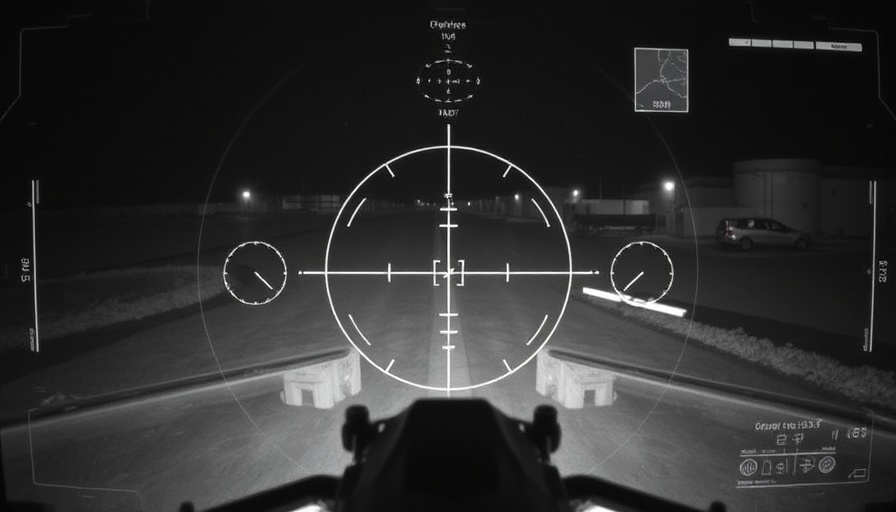
Ukrainian naval drones targeting system in thermal view.

The Dawn of Robotic Naval Warfare in Ukraine

The innovative tactics employed by the Ukrainian Navy are redefining the principles of naval warfare. With a fleet primarily composed of unmanned surface vessels (USVs), Ukraine has demonstrated remarkable effectiveness in striking Russian coastal defenses, even without a traditional navy. The incorporation of robotic warfare was propelled recently as USVs successfully launched explosive first-person view (FPV) drones to destroy Russian air-defense units deep within occupied territory.

Transforming the Battlefield: The Role of Technology in Naval Operations

This strategic evolution comes in response to intense military engagements between Ukraine and Russia, highlighting a new era where technology dictates warfare dynamics. The FPV drones not only expand the horizon of targets but are also launched from specially designed compartments on USVs like the Sea Baby and Magura V5. This advancement illustrates a significant shift in military tactics, akin to the rapid developments seen in aerial warfare over the decades, with unmanned vessels becoming critical components.

Seen, But Not Detected: Stealth Tactics Behind Successful Operations

Such operations, meticulously planned and executed, have reshaped attack strategies in the Black Sea. In a remarkable display of synergy among military forces, Ukrainian naval forces, co-operating closely with the Security Service of Ukraine, were able to bypass comprehensive Russian coastal defenses. These tactical advancements serve as a reminder that innovation often arises from necessity, with Ukrainian engineers creating solutions that leverage the ocean as an advantage rather than a limitation.

The Psychological Edge: Inflicting Damage from Afar

Ukraine's use of naval drones has not just been effective in terms of physical destruction but has also demonstrated a psychological impact on Russian forces. The successful strikes on systems like the Osa and Strela cater to enhancing Ukrainian morale while bringing unpredictability to Russian expectations. The ability to launch attacks from depths of Ukrainian territory ensures that Russia's extensive coastal defenses face continual threats, transforming the battlefield into a complex web of uncertainty.

Community Support Driving Military Innovation

This wave of technological advancement and military success is bolstered by local support and engagement. Generous donations have aided Ukraine's military to acquire essential drone technology, ensuring that these operations are not merely militaristic but a collective national effort. The ongoing collaboration between civilian innovation and military application signifies a pivotal change in how warfare is fought—where community and collaboration can make significant contributions to resilience and victory.

The ongoing evolution of the Ukrainian naval strategy is a testament to the rapid adaptation and innovative spirit that can emerge from geopolitical unrest. As the advancements continue, they pave the way for a complex discussion about the future of naval warfare and the role of unmanned technology in shaping the tides of conflict.

Space & Aerospace Tech

7 Views

0 Comments

Write A Comment

*
*
Please complete the captcha to submit your comment.
Related Posts All Posts
05.23.2026

Uncovering the Dangers of Martian Drones in Modern Warfare

Update The Rise of Martian Drones: A New Era in Warfare In the shadow of a brutal conflict, the Ukrainian military's innovative use of advanced drones has become a game-changer on the battlefield. Among these, the so-called 'Martian' drones have gained notoriety for their ability to identify and destroy Russian supply trucks with alarming precision. These technological marvels represent a significant evolution in modern warfare, raising concerns within the Russian military. Understanding the Martian Drones' Technology These drones operate at low altitudes, evading radar detection and utilizing sophisticated navigation systems inspired by NASA's Mars exploration technologies. Unlike traditional drones that rely on GPS, the Martian drones utilize visual navigation, allowing them to thrive in environments where GPS jamming tactics would traditionally render them ineffective. Equipped with advanced AI systems, these drones can identify threats and lock onto targets from over 80 miles away. Their stealth capabilities and reliability, boasting a nearly 100% success rate, have made them a formidable opponent for Russian forces. Impact on Russian Supply Lines The implications of these improvements are staggering. With the Martian drones' ability to disrupt supply chains, Russian forces are struggling to maintain operational efficiency. Resupply routes that were once considered secure are now vulnerable, echoing sentiments from Russian bloggers who compare the current situation to the logistical challenges faced in past conflicts. As the conflict continues, the strategic advantage appears to be shifting towards Ukrainian forces, who have effectively utilized drone technology to combat the traditional military superiority exhibited by Russia. Future Trends in Drone Warfare Experts project that as drone technology advances, the nature of warfare will dramatically change. Eric Schmidt, a prominent investor in drone technology and former CEO of Google, predicts a future where warfare is dominated by drones. His vision suggests that nations need to adapt swiftly to these changes, as the face of conflict evolves into a more automated and technologically driven arena. The potential for fully autonomous drones in warfare poses ethical questions and challenges for international law, potentially reshaping military strategies worldwide. Conclusion As we continue to observe the ongoing conflict between Russia and Ukraine, the impact of drones on military operations cannot be overstated. With the rise of sophisticated technologies like the Martian drone, the complexities of modern warfare are becoming more evident. Understanding these changes is crucial for followers of aerospace defense technology and military strategy.

05.23.2026

SpaceX Set for Starship Launch Retry: Will It Inspire Confidence?

Update SpaceX's Upcoming Starship Launch: A High-Stakes Retry After a dramatic countdown that ended in a launch scrub on Thursday, SpaceX is poised to make another attempt at launching its upgraded Starship V3 rocket. The latest test flight is scheduled for this Friday, during a 90-minute launch window starting at 5:30 p.m. Central Time (6:30 p.m. Eastern Time). The stakes are extraordinarily high, with SpaceX not only testing its most advanced rocket yet but also gearing up for a significant initial public offering (IPO). The Challenges Encountered During the previous attempt, a technical issue related to the hydraulic system on one of the launch tower's massive arms halted the countdown at just 40 seconds. Engineers struggled with quick disconnect fittings that link the rocket to the launchpad, prompting the call to postpone the test. Despite these hiccups, SpaceX remains optimistic, with Elon Musk indicating that fixes could allow for the flight to occur as planned this week. Importance of the Starship V3 The Starship V3 represents months of redesign efforts following a tumultuous streak of failures where earlier models faced disintegration amidst test flights. This latest version has been engineered with numerous upgrades aimed at enhancing performance, particularly for rapid deployments of Starlink satellites and facilitating future human missions to the Moon for NASA. Critical Considerations Ahead of the Launch With a targeted valuation of $1.75 trillion for the upcoming IPO, investor confidence hinges significantly on the success of this test flight. The Starship program is a crucial element of SpaceX's broader goals, which range from cost reductions in launching payloads to developing capabilities for extended space missions. A Culture of Engineering Resilience SpaceX's approach to aerospace engineering is notably distinct from traditional practices. The company thrives on the concept of failure as a learning opportunity, embodying a risk-tolerant culture that pushes for frequent flight testing. Musk has asserted that a failure this Friday would only delay future launches minimally, thanks to an extensive pipeline of V3 ships and boosters ready for production. Looking Forward As observers eagerly await the next test flight, it's clear that SpaceX continues to hope for a successful launch that could bolster not only its ambitions in space exploration but also the burgeoning private aerospace industry. Should the launch succeed, it would mark a significant milestone in the quest for more reliable and cost-effective space travel.

05.21.2026

USS Gerald R. Ford's Caribbean Mission: A Crucial Play in U.S. Defense Strategy

Update Oldest Supercarrier Heads to the CaribbeanThe USS Gerald R. Ford (CVN-78), the U.S. Navy's oldest supercarrier, has arrived in the Caribbean for a mission that marks a significant shift in military operations in the region. This deployment comes as part of an ongoing strategy to combat transnational crime and support U.S. Southern Command's efforts against narcotic trafficking.Initially, the Gerald R. Ford was serving in the Mediterranean, participating in joint operations aimed at maintaining stability in volatile areas, including those surrounding Israel and Gaza. This transition to the Caribbean not only reflects the U.S. Navy's ability to adapt its strategic positioning, but it also signifies a growing focus on drug interdiction efforts in the Western Hemisphere.Strategic Importance of the DeploymentThe deployment of supercarriers like the USS Gerald R. Ford is not merely a show of force; it is a calculated decision influenced by various geopolitical factors. With only 11 aircraft carriers in active service, a robust naval presence in the Caribbean might bolster national security in light of rising concerns regarding Venezuelan politics. Additionally, the potential for operational overlap between counter-narcotics missions and maritime security underscores the multifaceted roles these naval assets provide.Capabilities Beyond Counter-Drug OperationsCritics have pointed out that while aircraft carriers excel in air strikes and amphibious assaults, their deployment for surveillance and drug interdiction might not yield optimal results. The carrier's air wing typically includes fast jets such as F/A-18E/F Super Hornets, which are more suited for rapid combat scenarios than the prolonged detection needed in counter-narcotics efforts. Nevertheless, the accompanying naval destroyers enhance operational capabilities, deploying helicopters and sensor systems that enhance regional security.Future Implications of Continued Naval PresenceAs the USS Gerald R. Ford continues its mission, questions arise regarding the sustainability of this naval presence. Future extensions of this deployment could strain U.S. resources, particularly as the carrier is expected to undergo maintenance next year. Strategic trade-offs will need to be made, as other global commitments demand attention, illustrating the delicate balance of maintaining maritime strength in multiple theaters.In conclusion, the deployment of the USS Gerald R. Ford to the Caribbean signifies a strategic pivot for U.S. naval operations. This reinforces a commitment to not only countering narcotic trafficking but also protecting broader national interests in a region that has often seen a reduced naval presence. Observers should pay close attention to how this mission unfolds, as future air and naval strategies could depend on its success.

Terms of Service

Privacy Policy

Core Modal Title

Sorry, no results found

You Might Find These Articles Interesting

T
Please Check Your Email
We Will Be Following Up Shortly
*
*
*