
AiTechDigest
update
AI Tech Digest
AiTechDigest
update
  • Home
  • Categories
    • AI & Machine Learning
    • Future Technologies
    • Tech Industry News
    • Robotics & Automation
    • Quantum Computing
    • Cybersecurity & Privacy
    • Big Data & Analytics
    • Ethics & AI Policy
    • Gadgets & Consumer Tech
    • Space & Aerospace Tech
  • All Posts
  • AI & Machine Learning
  • Future Technologies
  • Tech Industry News
  • Robotics & Automation
  • Quantum Computing
  • Cybersecurity & Privacy
  • Big Data & Analytics
  • Ethics & AI Policy
  • Gadgets & Consumer Tech
  • Space & Aerospace Tech
February 08.2025
2 Minutes Read

Revolutionizing Space Exploration: NASA's AI Scooping Breakthrough

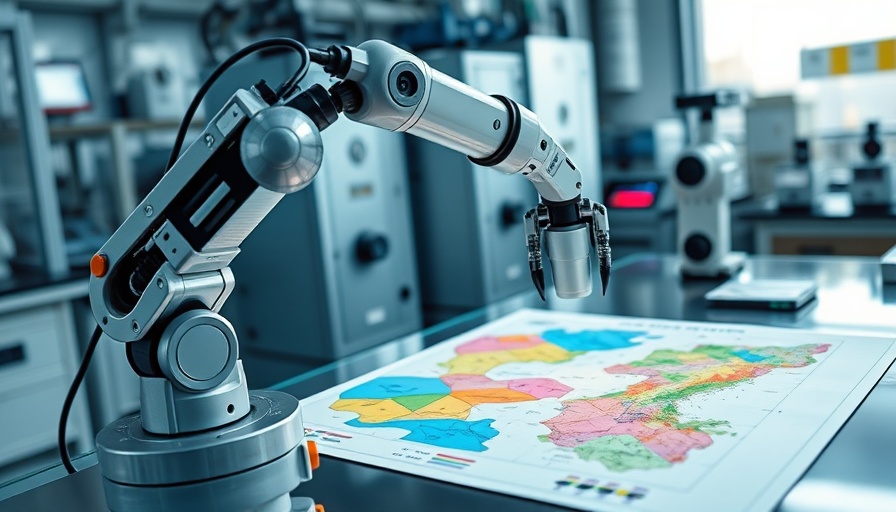
AI in space exploration with robotic arm and colorful map.

AI's First Steps on Alien Terrain

Imagine a future where robotic landers, designed to explore the rugged terrains of distant moons and planets, employ advanced AI technologies to make autonomous decisions in real time. Recently, researchers from the University of Illinois at Urbana-Champaign have demonstrated just that. In an innovative experiment hosted at NASA's Jet Propulsion Laboratory (JPL), they trained an AI model to autonomously assess diverse materials and scoop samples, showcasing its functionality in a controlled yet groundbreaking environment.

Transforming Moon and Mars Missions

The AI model's development stemmed from a pressing need in aerospace and planetary science: the ability to quickly gather samples in extraterrestrial environments. With limited battery life and strict mission timelines for landers on planetary surfaces, efficiency is not just important; it can determine the success of a mission. The robot’s scooping mechanism was tested with various materials, from coarse sand to solid rocks, and created an extensive database of 6,700 data points. This training allows the AI to adapt to new surfaces without any substantial preprocessing or manual input, making it invaluable for future explorations.

Real-time Learning: A Leap Forward

One of the remarkable aspects of this experiment was how the AI learned to operate in a new environment. Aerospace Ph.D. student Pranay Thangeda described using a network link to connect with JPL's testbed. The model was able to analyze images captured by its robotic arm in real time, immediately identifying non-scoopable materials and then successfully moving on to gather samples from areas that were more promising. This real-time analysis mimics how we expect future robotic landers to behave on unexplored celestial bodies.

The Broader Implications of Autonomous Robotics

While this research initially focused on the exploration of ocean worlds, its implications are far-reaching. The model's ability to adapt without prior exposure to different terrains could revolutionize not just space exploration, but also several industries on Earth such as mining, archeology, and environmental monitoring. Potential applications extend to any context where adaptive sampling is advantageous— be it a remote landscape or a disaster zone.

Looking Ahead: Autonomous Rovers on Mars

This breakthrough resonates deeply with NASA's ongoing endeavors to send rovers to Mars and beyond. As technologies improve, we can anticipate that future missions will not only involve autonomous rovers like the Perseverance but will also integrate AI models that can learn and make decisions on the fly. Thangeda's enthusiasm for this research sheds light on the potential these innovations hold for space exploration.

Through this demonstration, we are not just witnessing a technological achievement; we are peering into the future of how humans will interact with far-off worlds. The continued development of AI-assisted robotic landers represents a paradigm shift in our approach to celestial exploration, potentially leading to discoveries that could reshape our understanding of the universe.

AI & Machine Learning

11 Views

0 Comments

Write A Comment

*
*
Please complete the captcha to submit your comment.
Related Posts All Posts
07.07.2026

Master the Art of Publishing AI Agents in Gemini Marketplace

Update Unlocking the Power of AI with Gemini Solutions The Gemini Enterprise and Google Cloud Marketplace provide exciting opportunities for developers looking to publish agents that leverage artificial intelligence (AI) and machine learning technologies. With these tools, developers not only enhance their applications' capabilities but also tap into a vast marketplace where they can reach a broader audience. Understanding the Importance of Agent Publishing With the rise of AI, the capabilities of software agents have dramatically improved, offering solutions that can efficiently process vast amounts of data and automate tasks. Publishing agents in the Gemini platforms means placing these advanced solutions into a marketplace that embraces innovation. The significance of this cannot be overstated, as businesses today are actively seeking tools that improve efficiency and decision-making. A Step-by-Step Guide to Publishing 1. Preparing Your Agent: Before diving into publishing, ensure your agent is well-optimized for deployment. This includes rigorous testing to guarantee functionality and performance, essential for meeting user expectations. 2. Configuration: Leverage the tools provided by Gemini to configure your agent. This step often involves defining the agent's capabilities and how it interacts with other components within the Google Cloud ecosystem. 3. Deployment and Marketing: Once your agent is ready, it’s time to deploy it to the Google Cloud Marketplace. Here, you can also craft a marketing strategy that highlights the unique benefits and use cases of your agent. Benefits of Using Gemini for Publishing Agents The Gemini Enterprise provides several benefits for developers: Scalability: With Google Cloud’s infrastructure backing your applications, you can easily scale to meet demand. Integration: Seamless integration with existing Google Cloud services facilitates enhanced functionality and ease of use. Market Access: Gain visibility and tap into a rich user base actively seeking AI and machine learning solutions. Future Predictions and Trends in AI Publishing As AI technology continues to evolve, we can anticipate enhanced capabilities for agents, such as better predictive analytics and more effective natural language processing. This will open new doors for innovative applications across various industries, making AI tools increasingly indispensable. Emphasizing Responsible AI Development While the capabilities of AI are remarkable, developers must remain mindful of ethical considerations in their implementations. Creating agents that respect user privacy and operate transparently will be paramount as AI continues to impact society. Final Thoughts: Joining the AI Revolution Publishing agents in Gemini Enterprise and Google Cloud Marketplace is not just about coding; it's about participating in a transformative technological movement. By leveraging AI and machine learning, developers can innovate, disrupt, and ultimately enhance how industries function. The future is brimming with potential, and now is the time to seize it.

07.07.2026

Why AI as a Listening Ear Is Both Helpful and Risky for Users

Update Understanding AI as a Listening Ear: Assessing the Benefits and Risks The emergence of artificial intelligence (AI) as a tool for listening and interpreting human emotions presents both fascinating opportunities and serious risks. As AI technologies advance, they take on the role of a 'listening ear,' capable of understanding and responding to our needs based on vast amounts of personal data. However, with these capabilities come significant privacy concerns that cannot be overlooked. AI Privacy: A Growing Concern Artificial intelligence relies heavily on data, feeding on details generated from everyday interactions, often without explicit consent. This reality raises questions about the adequacy of current privacy regulations. The collection of sensitive information, be it health records or personal preferences, poses a profound risk of exposure or misuse, solutions for which are still evolving rapidly. For instance, many users assume that the technologies they engage with—such as personalized music apps or smart home assistants—are benign in their data collection practices. Contrary to this belief, researchers note that organizations are increasingly leveraging data in ways that may not align with individuals' expectations of privacy. The Ethics of AI Listening The ethics surrounding AI as a listening technology focus on consent and transparency. With AI systems increasingly ingrained in our daily lives—from managing home security systems to advising on travel routes—people must recognize how their data can create a complete profile of their behaviors and preferences. Experts argue that ethical considerations must account for the balance between innovation and personal privacy. Currently, regulations like the EU's General Data Protection Regulation (GDPR) and regional laws in the U.S. begin to address these concerns by mandating clarity in how personal information is used. This framework aims to ensure that individuals maintain control over their data, especially in contexts where AI actively listens and interprets the information. Beneath the Surface: Algorithmic Bias and Its Implications Despite the potential of AI to improve our lives significantly, there are inherent risks associated with bias encoded in machine learning models. When AI listens and learns from data sets that may reflect societal prejudices, it risks further entrenching discrimination in its applications. This underscores the necessity for continuous oversight as we integrate AI more deeply into personal and professional spheres. Moreover, as AI becomes smarter at discerning emotional cues, it inadvertently raises the stakes around who controls this technology. Audiences must demand transparency in AI design and implementation processes to safeguard ethical standards that demand accountability from corporations behind these systems. Empowering Individuals Through Knowledge To navigate the complexities posed by AI technologies, individuals must be proactive in understanding how their data is collected and used. This awareness fosters a more informed public dialogue about responsibilities—both for consumers who engage with technology and companies that develop it. By advocating for stronger privacy rights, consumers have the power to shape policies that protect their interests while still allowing innovation to flourish. Conclusion: The Path Forward As AI continues to evolve, its role as a listening ear brings both exciting possibilities and daunting challenges. Striking a balance between harnessing AI’s capabilities and protecting individual privacy is crucial. Through informed discussions and advocacy for rigorous ethical considerations, society can navigate this new technological landscape responsibly.

07.04.2026

RoboCup 2026: The Rise of AI Footballers Redefining Sports Entertainment

Update Robots Take the Field: A New Era of Football The recent RoboCup 2026 event held in Incheon, South Korea, showcased an extraordinary leap in robot technology as humanoid robots engaged in autonomous football matches. Unlike traditional remote-controlled robots, these advanced machines operate semi-independently, making their own tactical decisions. As they darted about the pitch, the crowd erupted in cheers not just for successful goals, but for the remarkable ability of these robots to react in real-time to their environment, demonstrating the best of artificial intelligence and robotics. The Vision Behind RoboCup RoboCup, founded in 1997, has always had a lofty goal: to create a fully autonomous robot team that can defeat the reigning FIFA World Cup champions by the year 2050. This year’s tournament was a testament to the rapid progress being made, with teams showcasing humanoid robots capable of performing complex tasks, such as scoring goals and responding instantly to referee commands. The spectacle stunned spectators, many of whom expressed their surprise at how human-like the robots appeared on the field. Captivating Spectators: The Human Element The atmosphere at RoboCup revealed underlying human emotions akin to traditional sports events. Observers found themselves cheering for specific teams and players, and comments about 'supporting the blue team' highlighted how quickly fans could form attachments, even to artificial athletes. Kim Mi-hong, a 60-year-old spectator, predicted that as robots improve, they could cultivate dedicated fan bases much like human athletes. Advancements in AI and Robotics Recent advancements in machine learning and robotics are driving this astonishing progress. Researchers from various universities emphasized the potential of AI to enhance robot capabilities, making them more effective at mimicking human soccer plays. The match experiences were illuminated by comments from experts like Thomas Rofer, who noted the advancements are so significant that some robots can kick as hard as a human, and there is a growing expectation that these robots could outperform humans within a few decades. The Future of Robot Sports The evolution of robot football may redefine the world of sports. As Shim In-wook, a professor of smart mobility engineering noted, creating exceptional humanoid athletes like a "robot Messi" could lead to a future where thousands of robot players could compete at high levels, potentially transforming the competitive landscape completely. The financial implications are vast, with predictions suggesting the global humanoid robotics market could balloon to $5 trillion by 2050. Conclusion: Embracing Change in Sports The excitement at RoboCup 2026 serves as a powerful reminder of how quickly technology can reshape our experiences and entertain us in unexpected ways. As robot football gains traction, we must consider not only the technological advancements but also the social connections and fan interactions it will foster. The boundaries of sport are shifting, and we are only beginning to understand the implications of this robotic revolution.

Terms of Service

Privacy Policy

Core Modal Title

Sorry, no results found

You Might Find These Articles Interesting

T
Please Check Your Email
We Will Be Following Up Shortly
*
*
*