
Add Row
Add Element
AiTechDigest
update
AI Tech Digest
AiTechDigest
update
Add Element
  • Home
  • Categories
    • AI & Machine Learning
    • Future Technologies
    • Tech Industry News
    • Robotics & Automation
    • Quantum Computing
    • Cybersecurity & Privacy
    • Big Data & Analytics
    • Ethics & AI Policy
    • Gadgets & Consumer Tech
    • Space & Aerospace Tech
  • All Posts
  • AI & Machine Learning
  • Future Technologies
  • Tech Industry News
  • Robotics & Automation
  • Quantum Computing
  • Cybersecurity & Privacy
  • Big Data & Analytics
  • Ethics & AI Policy
  • Gadgets & Consumer Tech
  • Space & Aerospace Tech
July 04.2025
2 Minutes Read

Revolutionizing Motor Safety: AI-Powered Systems Uncover Hidden Faults

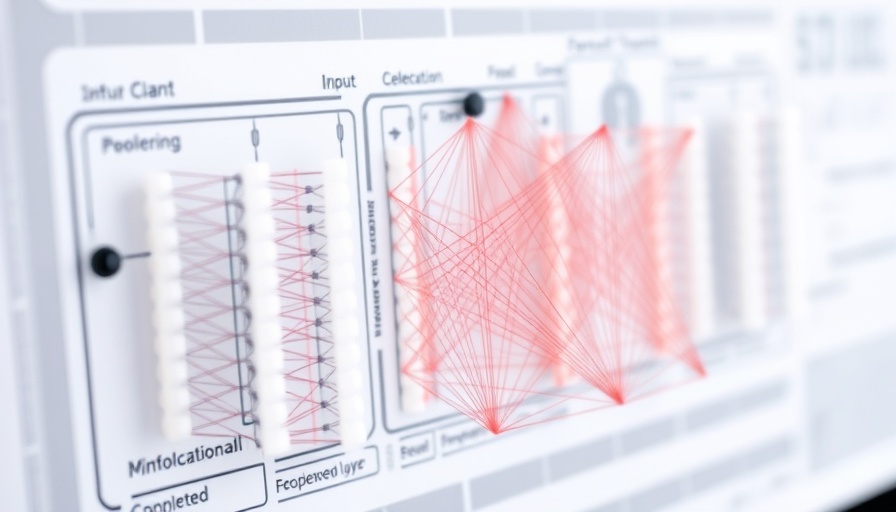
Complex neural network diagram for AI-powered motor diagnostics.

Transforming Motor Diagnostics with AI

In the ever-evolving world of technology, the integration of artificial intelligence into motor diagnostics marks a significant advancement. A groundbreaking study spearheaded by Dr. Wentao Huang has successfully addressed a crucial gap in five-phase permanent magnet synchronous motor (PMSM) diagnostics. Conventional methods often fall short in assessing inter-turn short-circuit (ITSC) severity, which poses serious risks in various applications, particularly electric vehicles.

Understanding Inter-Turn Short-Circuit Challenges

Historically, quantifying ITSC severity in operating motors has challenged engineers due to the intricate nature of motor fault parameters. Traditional diagnostic methods lacked the ability to decouple these complexities, leaving critical situations undetected and risks unmitigated. Unchecked, these faults can lead to severe outcomes like irreversible demagnetization, putting both equipment and safety in jeopardy.

How AI and data analytics are revolutionizing motor safety

The innovative diagnostic method introduced combines a real-time tracker with an AI analyzer to assess faults and quantify damage effectively. Utilizing advanced technologies like the extended state observer (ESO) and convolutional neural networks (CNN), this study represents a substantial leap forward. By isolating short-circuit turn ratios from fault resistance without the confusion of complex parameters, this method enables real-time severity grading—an important factor in determining targeted responses for safeguarding motors.

Future Developments: Self-Protecting Motors

Moving forward, the implications of this research extend beyond mere diagnostics. The next phase aims to develop motors with self-protection capabilities, which would automatically reduce power during fault detection, thereby preventing further damage. This innovation is expected to enhance live fleet health monitoring when integrated with factory networks, pointing towards a future of smart, self-protecting machines.

Adapting Technology Beyond Industrial Use

The potential applications for this technology stretch well into critical infrastructure. For instance, it could play a vital role in reinforcing the safety of wind turbines against generator failures in challenging operating environments. Moreover, aerospace applications could utilize these protective systems in electric propulsion to safeguard against in-flight hazards, underlining the vast field of opportunities that AI technology brings to enhance motor safety and reliability.

The Importance of Innovation in Safety Protocols

As technology evolves, understanding its implications on safety protocols in various industries becomes increasingly vital. The AI-powered diagnostic methods not only offer better fault detection but also pave the way for creating a safer operational environment in high-risk sectors. These innovations highlight the importance of embracing AI and machine learning as tools for enhancing product safety and reliability.

In summary, the integration of AI in motor diagnostics is changing the game for safety measures. By utilizing advanced technologies to identify and mitigate risks associated with motor faults, industries can better protect not only their machinery but also the safety of people relying on these innovative systems.

AI & Machine Learning

2 Views

0 Comments

Write A Comment

*
*
Related Posts All Posts
12.14.2025

Discover the Potential of AI with Gemini Live API for Natural Interactions

Update Revolutionizing Conversational AI with Gemini Live API The tech world is on the brink of a major transformation with the introduction of the Gemini Live API, a feature embedded in Vertex AI that promises to redefine the way voice and video interactions are conducted. With the evolution from traditional, multi-stage voice systems to a streamlined, low-latency solution, developers now have the tools necessary to create incredibly natural conversational interfaces that seem almost human. The Technical Innovations Behind Gemini Live API At the heart of this innovation is the Gemini 2.5 Flash Native Audio model, which processes audio data in real time and supports multiple modalities, combining audio, text, and visual inputs. For years, developers relied on piecing together various technologies, such as Speech-to-Text (STT) and Text-to-Speech (TTS), which led to frustrating delays. Gemini Live API changes that by adopting a singular architecture that reduces latency drastically, allowing for a smoother user experience. Features That Set Gemini Live API Apart What makes the Gemini Live API particularly noteworthy are the next-generation features designed to elevate user interactions: Affective Dialogue: The API can gauge emotions from tone and pitch, allowing agents to engage empathetically with users. This is crucial in sensitive scenarios, like customer support, where emotional nuances can dictate the outcome of interactions. Proactive Audio: The technology allows agents to determine the right moments to interject in conversations, eliminating awkward interruptions and enhancing dialogue fluidity. Continuous Memory: The ability to maintain context across interactions means the AI can offer relevant information in real-time, unlike traditional systems that often lose track of ongoing conversations. Integrating the Gemini Live API into Applications For developers eager to take advantage of these cutting-edge features, integrating the Gemini Live API requires understanding the flow of data differently than with traditional REST APIs. By establishing a bi-directional WebSocket connection, developers can create applications that listen and respond in real-time—a shift that opens the door to imaginative uses across industries. For example, Gemini can be applied in: E-commerce: Providing personalized shopping experiences that adjust based on user queries in real-time. Gaming: Creating immersive and interactive experiences by integrating voice commands that react to gameplay. Healthcare: Supporting patients with timely responses informed by their emotional cues. Launching Your First Project with Gemini Live API For newcomers, the Gemini Live API comes equipped with a variety of templates to help get developers started. Choices range from simple platforms using Vanilla JavaScript to more sophisticated frameworks like React. Each template offers structured access to the powerful features of Gemini Live API, making it easier for developers to launch products that leverage real-time speech and emotional recognition. As organizations continue to embrace AI and machine learning, the Gemini Live API stands out as a pivotal tool, enabling applications that not only respond intelligently but also resonate emotionally with users. In a world dominated by interactive technologies, the Gemini Live API is undoubtedly set to lead the charge in creating truly immersive conversational experiences. Get Started Today: Dive into the Gemini Live API on Vertex AI and explore the impactful applications that await. Access a wealth of resources and community support to build the next generation of multimodal AI applications.

12.13.2025

Unveiling the ABSQR Framework: How This New System Explains AI Judgments in Real-Time

Update The New Frontier of Explainable AI in Real-Time Decision Making In an era where artificial intelligence (AI) is deeply woven into the fabric of industries like finance, the need for transparency and understanding of AI-driven decisions cannot be overstated. Traditional AI models often operate like black boxes—not allowing users insight into how conclusions are drawn. The introduction of the ABSQR framework by Professor Jaesik Choi and his team at KAIST marks a significant evolution in explainable artificial intelligence (XAI), making it possible to explain AI judgments in real-time with unprecedented efficiency. Understanding the ABSQR Framework The ABSQR (Amortized Baseline Selection via Rank-Revealing QR) framework is classified as a breakthrough in AI explanation technology. Its unique two-stage model prioritizes the selection of key baselines, which simplifies the computing process dramatically. Where conventional systems might demand a heavy computational load involving hundreds of baselines, ABSQR only focuses on the most critical few. This innovation results in processing speeds that are eight to eleven times faster than previously achievable methods. The Impact of Real-Time Explainability in Finance For sectors where decisions impact customer rights—like finance—being able to explain the reasoning behind AI choices is not just useful; it’s essential. Decisions made on loan approvals or fraud detection must be backed by clear, coherent explanations to comply with regulatory frameworks, such as those outlined by the EU's GDPR and the US Equal Credit Opportunity Act. ABSQR's rapid processing capabilities directly address this growing demand, allowing financial institutions to visualize the rationale behind AI decisions quickly and effortlessly. Transforming Regulatory Compliance and Trust The risk that comes from non-compliance with AI-driven decisions is alarming. Financial institutions that fail to transparently explain their processes risk severe penalties, loss of trust, and reputational damage. By leveraging the ABSQR framework, banks and fintech companies can improve communication with clients by clarifying how decisions affecting them are made. This not only promotes accountability but also bolsters customer trust, which is vital in an industry where every decision counts. Future Predictions: The Path Ahead for Explainable AI As the integration of AI within finance expands, the relevance of explainable AI is set to grow alongside it. Analysts predict that future implementations will see deeper integration between generative and explainable AI models, providing even more nuanced decision-making tools for industry leaders. If organizations can adapt and adopt such frameworks, they will not only meet the challenges of regulatory compliance with ease but also foster a culture of trust and understanding with their customers. Adapting to this new technology is crucial. As organizations look to integrate explainable AI methods into their operations, the insights offered by frameworks like ABSQR could guide significant advancements in transparency, efficiency, and customer engagement. In conclusion, the ABSQR framework could very well define the future of AI in finance, marrying the speed of technology with the necessity for human accountability. As institutions strive for innovation, they must prioritize explainability to navigate the complexities of modern financial landscapes successfully.

12.13.2025

2026 Cybersecurity Forecast: How AI Will Transform Defense Strategies

Update The Future of Cybersecurity: Key Insights for 2026 As we look towards the end of 2025 and the beginning of a new year, the cybersecurity landscape is set for transformative changes primarily driven by the increased integration of artificial intelligence (AI) across the board. According to recent forecasts, including Google's Cybersecurity Forecast report for 2026 and industry insights from leaders like Palo Alto Networks and Trend Micro, we stand at a pivotal moment where AI not only enhances security measures but also presents unprecedented risks. AI: Friend and Foe in Cybersecurity Francis deSouza, COO of Google Cloud, emphasizes that 2026 may very well be the year that AI fundamentally reshapes how organizations handle security. On one hand, AI capabilities will empower security teams to automate threat detection and response operations efficiently. Autonomous agents will be crucial in transforming security operations centers from mere monitoring hubs to proactive engines capable of taking real-time actions against threats. This paradigm shift is essential as the speed at which cybercriminals operate continues to accelerate. However, as highlighted by experts from Palo Alto Networks, the rise of AI also entails new challenges. The cybersecurity landscape has become a battleground where AI is wielded by both security defenders and attackers. With attackers increasingly deploying AI in sophisticated phishing campaigns and identity theft, organizations must remain vigilant in training their workforce on AI fluency to counteract these emerging threats. The Ongoing Evolution of Cyber Threats 2026 is likely to usher in a wave of AI-driven threats, as pointed out in the reports from both Palo Alto Networks and Trend Micro. The automation of cybercrime means that what was once the domain of skilled hackers is now accessible to less-experienced threat actors using AI tools. For instance, AI will enable the proliferation of deepfakes and enhanced social engineering attacks that blur the lines of trust. This crisis of authenticity necessitates that organizations not only adopt cutting-edge technologies but also cultivate a culture of constant vigilance and training. Building an AI-Fluent Security Culture One of the most pressing recommendations from these reports is the urgent need for organizations to prioritize AI literacy within their cybersecurity workforce. As attackers leverage AI to craft convincing phishing exploits, businesses are urged to equip employees with the knowledge and skills to identify and mitigate these threats. As emphasized in Google’s report, investing in robust training programs and interactive workshops—where employees engage in simulated cyber scenarios—can significantly increase resilience against the evolving threat landscape. The Role of Regulatory Frameworks As AI continues to infiltrate the operations of cybersecurity, regulatory obligations are also shifting. With AI-driven solutions quickly becoming the norm, maintaining legal compliance surrounding data protection, privacy, and ethical AI usage is essential. Cybersecurity experts predict that regulators will demand heightened accountability from organizations regarding their AI use, prompting companies to reformulate strategies that align technology adoption with regulatory expectations. A Collaborative Approach to Cyber Resilience To combat the increasingly complex matrix of threats in the coming year, organizations are encouraged to adopt a collaborative approach to cybersecurity. Connecting security teams with insight from third-party threat intelligence and leveraging shared information can provide greater visibility and understanding of the landscape. Through collective efforts, businesses can cultivate a proactive defense strategy that not only secures their infrastructure but also builds trust with clients and partners alike. As we advance into 2026, understanding the dual role of AI in cybersecurity will be crucial. The insights gathered from leading reports highlight the urgency for organizations to adapt, train, and innovate continuously. Adopting a forward-thinking approach that incorporates automated defense mechanisms, a fortified workforce, and a commitment to regulatory compliance will be necessary to navigate the next wave of cyber threats effectively.

Terms of Service

Privacy Policy

Core Modal Title

Sorry, no results found

You Might Find These Articles Interesting

T
Please Check Your Email
We Will Be Following Up Shortly
*
*
*