
Add Row
Add Element
AiTechDigest
update
AI Tech Digest
AiTechDigest
update
Add Element
  • Home
  • Categories
    • AI & Machine Learning
    • Future Technologies
    • Tech Industry News
    • Robotics & Automation
    • Quantum Computing
    • Cybersecurity & Privacy
    • Big Data & Analytics
    • Ethics & AI Policy
    • Gadgets & Consumer Tech
    • Space & Aerospace Tech
  • All Posts
  • AI & Machine Learning
  • Future Technologies
  • Tech Industry News
  • Robotics & Automation
  • Quantum Computing
  • Cybersecurity & Privacy
  • Big Data & Analytics
  • Ethics & AI Policy
  • Gadgets & Consumer Tech
  • Space & Aerospace Tech
May 28.2025
2 Minutes Read

Naval Academy Reshelves Controversial Books: A Reflection on DEI in Education

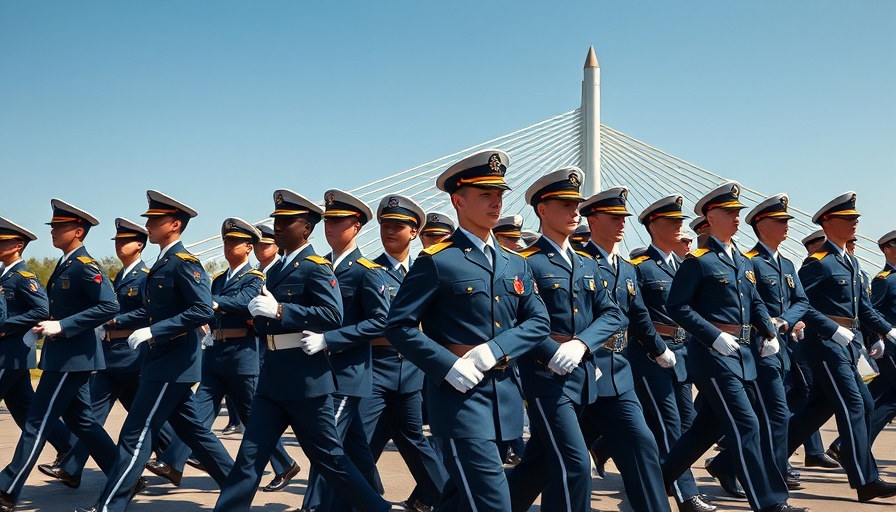
Naval cadets marching under bridge, U.S. Naval Academy DEI reversal.

A Turning Point in Literature: The Naval Academy's Bold Decision

The recent reversal at the U.S. Naval Academy regarding its library collections marks a significant moment in the intersection of education, military policy, and the broader social conversation about diversity, equity, and inclusion (DEI). In April 2025, the academy, following a Pentagon directive, removed 381 books that addressed contentious topics such as race, gender identity, and social justice. However, just a month later, the majority of these titles found their way back to the shelves, reflecting an evolving perspective on the importance of inclusive narratives.

This about-face aligns with a wider national dialogue about the role of DEI in educational institutions. Critics argue that the initial purge reflected an alarming trend of censorship and an attempt to sanitize history. The reinstatement of these books not only acknowledges their educational value but also underscores the need for diverse perspectives in the military's narrative.

The Role of Educational Materials in Military Cohesion

The question remains: why was the removal necessary in the first place? The rationale presented by the current administration posited that certain materials could lead to divisive concepts, undermining military cohesion and effectiveness. Yet, the very fabric of military leadership thrives on diverse viewpoints and an understanding of varying cultural backgrounds. The debate exposes the tension between maintaining unity and fostering an inclusive environment.

Interestingly, this isn’t the first time the academy has navigated through these politically charged waters. A ruling from December 2024 permitted the academy to incorporate affirmative action in admissions, illustrating ongoing efforts to maintain diversity in officer training. Such decisions reflect a recognition of the unique needs of military education compared to civilian counterparts.

The Bigger Picture: Implications for Military Education

In reinstating these books, the Naval Academy sends a clear message: education should not shy away from difficult conversations. As military leadership evolves, understanding historical and contemporary issues of race, identity, and social justice becomes imperative. Developing officers capable of leading diverse teams requires access to comprehensive educational resources.

This incident raises critical questions about how other military and educational institutions will balance directives from leadership with the imperative for a well-rounded education. The implications for society extend beyond military realms, influencing discussions about how we approach DEI across various sectors.

Space & Aerospace Tech

4 Views

0 Comments

Write A Comment

*
*
Related Posts All Posts
08.20.2025

Air Canada's Flight Attendants Strike a Deal Amid Ongoing Battles in PSA Airlines

Update Air Canada Flight Attendants Secure New Tentative Agreement Amid an air travel landscape fraught with tensions surrounding labor negotiations, flight attendants at Air Canada have achieved a critical milestone by reaching a tentative agreement characterized by enhanced benefits. This development is noteworthy not only for its immediate impact on Air Canada’s cabin crew but also for its reflection on the broader trends in airline labor negotiations. Challenges Persist for PSA Airlines Flight Attendants In stark contrast, the atmosphere at PSA Airlines, a regional partner of American Airlines, remains tense as flight attendants demand better contract terms. Led by the Association of Flight Attendants, these employees are advocating for improved pay rates, particularly boarding pay—a crucial component that has gained traction across the industry. While Air Canada’s flight attendants have successfully obtained a tentatively favorable deal, the PSA attendants are frustrated with initial wage proposals being limited to low single-digit increases. Sean Griffin, a veteran flight attendant and vice president of PSA’s master executive council, emphasized that at PSA, boarding pay is only offered at 25% of what industry standards uphold, depicting a clear disparity in treatment. The Significance of Boarding Pay in Current Negotiations Boarding pay has emerged as an essential bargaining point across various airlines. As noted, this adjustment reflects evolving standards that impact both employee morale and financial security. Currently, while flight attendants at companies like Delta and United see boarding pay infused into their compensation, PSA flight attendants are left grappling with subpar offers. Positive Signs Amid Ongoing Negotiations Despite the challenges at PSA, the involvement of veteran negotiator Jerry Glass in upcoming talks in Washington, D.C., presents a beacon of hope. Griffin noted that the company’s willingness to bring Glass back to the table indicates a potential willingness to negotiate in good faith. This could ultimately lead to results that align more closely with what flight attendants nationwide are fighting for. The ongoing labor negotiations are not isolated incidents in the aerospace sector; they highlight the complexities and challenges faced by aviation workers today. For the community of airline employees, these developments carry implications that extend beyond immediate financial concerns—they reflect a collective push for acknowledgment, equity, and improved working conditions in an industry traditionally viewed as under-compensated. Empowering Flight Attendants Through Collective Action The recent demonstration by PSA flight attendants signifies the broader solidarity among airline workers advocating for their rights. As they rally for fair compensation and improved workplace policies, the outcomes of these negotiations could set significant precedents for future labor relations within the aerospace industry. The determination shown by these flight attendants is an empowering narrative for employees across various sectors.

08.19.2025

Discover Supernovae Hours After They Explode: A New Protocol

Update Revolutionizing Supernova Detection In the vast and mysterious universe, the explosion of a supernova can illuminate the night sky with an awe-inspiring brilliance that captivates astronomers and stargazers alike. With advancements in technology, researchers have developed a rapid-response protocol that promises to reveal these celestial explosions mere hours after they occur. The Importance of Timing Understanding the phenomenon of supernovae is crucial for astronomers, as these violent explosions play a vital role in the cosmic cycle of matter. Traditional observational methods often involve lengthy processes that delay the detection of these events. The newly designed rapid-response protocol allows telescopes to focus on the location of a supernova explosion shortly after it has occurred, significantly shortening the time frame in which scientists can study its aftermath. How Does the Rapid-Response Protocol Work? This innovative protocol leverages advanced algorithms and machine-learning techniques, which enable detectors to analyze data in real time. By rapidly processing signals from various telescopes, researchers can quickly identify when and where a supernova has ignited. This method not only enhances accuracy but also maximizes the likelihood of capturing the moment of explosion and the subsequent developments. Potential Insights and Discoveries By revealing supernovae within hours, scientists can gather invaluable data regarding their mechanisms and impacts. This rapid information access could lead to breakthroughs in our understanding of how stars evolve and the synthesis of heavy elements - critical knowledge for both astrophysics and cosmology. Furthermore, understanding supernovae is essential for grasping the dynamics of the universe and its expansion. Applications Beyond Astronomy The implications of these technological advancements extend beyond just astronomy. The methods developed for detecting supernovae can inspire similar rapid-response strategies in other fields. For example, rapid data processing techniques can enhance disaster response systems or healthcare diagnostics, showcasing the potential for cross-disciplinary benefits stemming from innovations in space. Conclusion: Embracing Celestial Phenomena The rapid-response protocol marks a significant leap in our capability to explore the universe's phenomena. As our technological prowess continues to grow, so does our understanding of the cosmos. The promise of timely knowledge about supernovae not only engages scientists but also inspires the next generation of space enthusiasts to delve into the wonders of the universe. The unfolding events in our cosmos remain a source of infinite curiosity and challenge; it's an exciting time to be part of the scientific community.

08.19.2025

Boeing's Strategic Gains: Why the Dog Days of Summer Won't Slow Them Down

Update Boeing's Resilience During Challenging Times In the midst of the traditional summertime slowdown, Boeing is managing to maintain its momentum, achieving notable production gains across its fleets. With the 737 MAX nearing its monthly production cap, the company shows a remarkable ability to adapt, as illustrated by a significant 37% rise in its stock since the beginning of the year. This surge reflects Boeing's strategic focus on enhancing quality and safety—a critical element that has influenced its recent performance in aircraft deliveries. Production Goals and Deliveries on the Rise During July, Boeing successfully delivered 37 MAX jets, aligning closely with the FAA-mandated production cap of 38 aircraft per month, a leap from the average of 35 in the preceding quarter. Further indications of their operational success appear with the company planning to increase production to 42 per month, pending FAA approval. Boeing's CEO, Kelly Ortberg, underscored the ongoing improvements in operational stability by highlighting how enhanced safety measures have influenced delivery quality. Global Market Dynamics Affecting Boeing China remains a pivotal market for Boeing, especially as U.S. regulatory challenges continue to evolve. Recent suspensions on delivery bans have enabled Boeing to renew its commitments, significantly affecting the company’s backlog of 6,572 aircraft—with ten percent designated for Chinese carriers. Interestingly, the reinstated tariff of 10% marks a layer of complexity in Boeing's planning for these international deals as they navigate a delicate balance between market demands and geopolitical factors. Future Outlook: 777X and Beyond Despite some delays, the progression of the 777X program appears promising as the fifth 777-9 successfully completed its first flight. Although the project is running six years behind schedule, Boeing aims to achieve completion by 2026, addressing a backlog of 551 aircraft. This goal marks an important milestone in Boeing’s endeavor to rebound not just from production challenges but also reputational setbacks experienced in previous years. Conclusion: The Future Holds Potential Boeing’s latest efforts signal resilience amid industry-wide turbulence. Their strategic improvements in aircraft production and quality assurance indicate a readiness to capitalize on both current demand and future market opportunities. As Boeing continues to innovate and adapt, stakeholders and investors alike should monitor how these developments may shape the company’s trajectory in the fast-evolving aerospace sector.

Terms of Service

Privacy Policy

Core Modal Title

Sorry, no results found

You Might Find These Articles Interesting

T
Please Check Your Email
We Will Be Following Up Shortly
*
*
*