
AiTechDigest
update
AI Tech Digest
AiTechDigest
update
  • Home
  • Categories
    • AI & Machine Learning
    • Future Technologies
    • Tech Industry News
    • Robotics & Automation
    • Quantum Computing
    • Cybersecurity & Privacy
    • Big Data & Analytics
    • Ethics & AI Policy
    • Gadgets & Consumer Tech
    • Space & Aerospace Tech
  • All Posts
  • AI & Machine Learning
  • Future Technologies
  • Tech Industry News
  • Robotics & Automation
  • Quantum Computing
  • Cybersecurity & Privacy
  • Big Data & Analytics
  • Ethics & AI Policy
  • Gadgets & Consumer Tech
  • Space & Aerospace Tech
April 23.2025
3 Minutes Read

Inspiring Innovation: The Hubble's Servicing Missions and Legacy

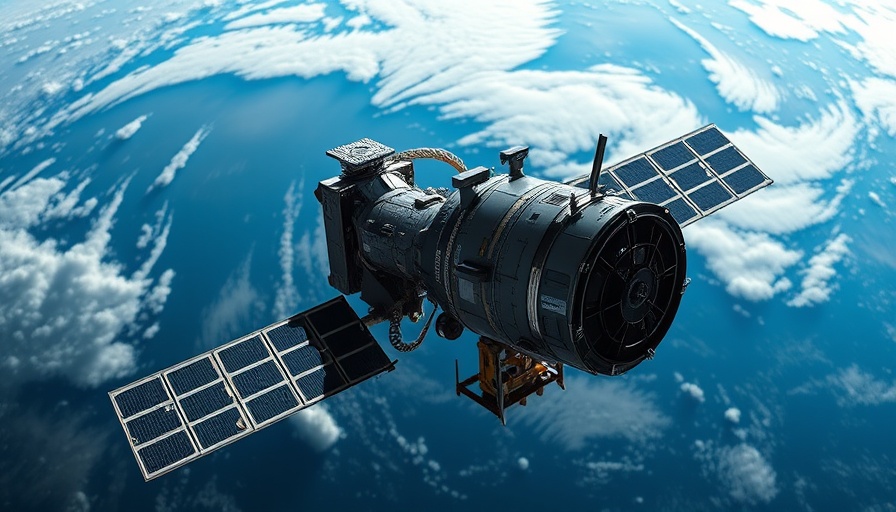
Hubble Space Telescope servicing mission in orbit with Earth view.

The Legacy of the Hubble Space Telescope

The Hubble Space Telescope, often likened to a large school bus in size and weight, has fundamentally transformed our understanding of the universe since its launch in 1990. The telescope's ability to capture stunning imagery has not only mesmerized amateur astronomers but has also provided invaluable data to scientists, making it a cornerstone of modern astrophysics. Over its 30-plus years in operation, Hubble has amassed nearly 250 terabytes of data, showcasing celestial phenomena ranging from the enigmatic behavior of black holes to a breathtaking look at distant galaxies.

The Launch: Triumphs and Tribulations

Initially, Hubble was celebrated for its ambitious project timeline, which began with concepts rolled out in the late 1960s. However, various hurdles, such as the tragic Challenger disaster, stretched the initial timeline extensively. After a long wait, Hubble finally launched aboard space shuttle Discovery on April 24, 1990, a landmark achievement in space exploration history.

Unfortunately, the elation from Hubble's launch soon turned into dismay when initial images revealed a glaring spherical aberration in its primary mirror. This defect, though minute — only 2 microns in curvature — rendered Hubble nearly ineffective for one of its primary missions: to provide clear and high-resolution images of space.

Servicing Missions: Engineering Marvels in Action

Hubble was designed with the capability to be serviced and upgraded, an intentional foresight by its engineering team. This design element became crucial after the discovery of the mirror flaw. In response, NASA orchestrated a series of servicing missions to fix and enhance Hubble's capabilities.

The first of these missions, known as Servicing Mission 1 (SM1), took place in December 1993, successfully installing corrective optics that revived Hubble's potential to deliver the extraordinary images scientists had hoped for. This mission laid the groundwork for subsequent upgrades, including the installation of new instruments and technological advancements that improved Hubble's research capabilities.

The Impact on Science: A Journey of Discovery

Hubble's contributions to science extend beyond stunning visuals; its observations have led to groundbreaking discoveries about the cosmos. From measuring the rate of expansion of the universe to revealing the existence of thousands of exoplanets, Hubble has maintained its status as an essential tool for astrophysics. Its ability to peer into deep space and time has unveiled secrets of the universe, providing insight into phenomena that were previously unimaginable.

The Future of Space Exploration: Innovations Inspired by Hubble

The legacy of the Hubble Space Telescope not only rests on its achievements but also on the innovations it inspired. Future space telescopes, such as the James Webb Space Telescope, build upon Hubble's groundbreaking findings, integrating advanced technology to further unravel the mysteries of our universe.

Understanding Hubble’s journey also illustrates the resilience of human innovation in the face of challenges and setbacks. As we continue to push the boundaries of space exploration, it's vital to remember the lessons learned through Hubble's lifecycle.

Conclusion: The Unfolding Legacy

Hubble's story is one of resilience, innovation, and the unending quest for knowledge. Its journey underscores the importance of adaptability in technological endeavors. The cooperative spirit seen throughout its servicing missions serves as a reminder that the most significant breakthroughs often come from collaborative endeavors in science and engineering.

Future Technologies

4 Views

0 Comments

Write A Comment

*
*
Please complete the captcha to submit your comment.
Related Posts All Posts
05.23.2026

Exploring Innovation and Identity in ‘For All Mankind’: Ruby Cruz and Ines Asserson Discuss Spacesuit Challenges

Update The Spacesuit Experience: Style Meets Functionality In the realms of science fiction, spacesuits are seen as futuristic attire that encapsulates the innovation within space exploration. For Ruby Cruz and Ines Asserson, stars of Apple TV's For All Mankind, donning these 'clunky' but cool suits takes on another layer of significance. Asserson shares, "The first time in a spacesuit was really cool, then I realized they're not that easy to wear. They're heavy and clunky, and you want them to look cool." This stark realization reflects not only the challenges of portraying a character in a zero-gravity environment but also how these outfits symbolize the evolution of space exploration. Emotional Depth: Characters with Rich Backstories Ines's character, Avery "AJ" Jarrett, comes from a family of astronauts who faced monumental sacrifice. Her struggle with identity and history is deeply interwoven into the narrative, presenting a poignant take on the human side of space travel. The combination of personal legacy and the stark realities of military training creates a rich, emotional backdrop for the character. This duality—of being proud yet burdened by her ancestral ties—enables viewers to relate on a more human level, reflecting the real-life complexities of those who serve. Molding Real-Life Skills: Training with Experts In preparation for their roles, both Cruz and Asserson underwent rigorous training, learning from military veterans, including a Green Beret. Asserson noted how valuable these sessions were, stating, "He was phenomenal. We learned to clear rooms, operate guns in a way that's realistic, and to work together as an OPEF group." Such training not only enhanced their physical performance while in character but also fostered genuine camaraderie among the cast members, echoing the shared bonds formed in the armed forces. The Technological Innovations Behind Modern Spacesuits As these characters navigate their on-screen universe dressed in spacesuits, it's important to recognize the real-life innovations that contribute to today's advancements in astronaut gear. Modern spacesuits are engineered to provide mobility, protection, and communication capabilities, evolving considerably from the bulky predecessors used during the Apollo missions. For actors like Cruz and Asserson, wearing these outfits becomes a tangible connection to the historical and future trajectory of space travel. A Closer Look at Cultural Representation in Sci-Fi Sci-fi serves as a mirror to society, reflecting and shaping views on technology and the future. By representing a diverse cast in space exploration narratives, shows like For All Mankind are breaking traditional molds and showing that anyone can be part of these futuristic adventures. This shift not only opens doors for varied representation in media but also communicates a hopeful vision for the future where innovation is accessible to all. Final Thoughts: The Journey of Self-Discovery through Space Both Ruby Cruz and Ines Asserson exemplify how acting goes beyond mere performance; it is a journey of self-discovery and expression of resilience. As they navigate profound character arcs, they also underscore the importance of teamwork—echoed in their rigorous training and shared experiences as actors. For All Mankind serves not just as entertainment but as a narrative exploring the boundless possibilities of space, identity, and innovation.

05.23.2026

Discover How Agentic AI Will Transform Electron Microscopy Techniques

Update How Can Agentic AI Revolutionize Electron Microscopy? Electron microscopy has long been a crucial tool in various scientific fields, enabling intricate observations at the atomic level. However, the path from capturing these thrilling images to deriving meaningful insights has traditionally been lengthy and laborious. New advancements in agentic artificial intelligence (AI) are paving the way for a dramatic transformation. The Role of Agentic AI in Experimentation The emergence of intelligent systems that can reason regarding experimental outcomes is shifting the landscape of electron microscopy. Recent research suggests that these agentic AIs can assist at multiple stages of the experimentation process—from planning to real-time adjustments during data collection. For instance, incorporating prior knowledge and executing iterative refinements during data collection could significantly reduce the time and effort that human scientists need to invest. Streamlining Processes for Rapid Results Take Cornell's groundbreaking EMSeek platform as a prime example. This innovative technology can process electron microscopy images and deliver scientifically relevant data in mere minutes. Traditionally, such analysis could take weeks, demonstrating the potential breakthroughs this technology offers. The ability of such systems to filter through large data effectively and derive conclusions hastens research and minimizes human error. Enhancing Scientific Collaboration Through AI The collaboration between human researchers and AI opens exciting avenues for scientific innovation. These AI systems can take on roles traditionally held by specialized personnel, allowing scientists to focus on deeper analysis rather than tedious data management. As the agentic AI evolves, it becomes capable of serving as a collaborative co-scientist, suggesting hypotheses, refining experimental designs, and assisting in real-time scientific discourse. The Future Is Collaborative While agentic AI promises to enhance microscopy practices, it also raises questions about the evolving role of human researchers. As systems become more adept at guiding experimentation, scientists will need to redefine their contributions: ensuring the accuracy of the data assembled by AI, engaging critically with the findings, and using insights to spark new questions. This collaborative framework positions electrons microscopes not just as instruments, but as partners in the pursuit of scientific understanding. Possibilities for Broadening Access Ultimately, the marriage of agentic AI with electron microscopy may democratize access to these cutting-edge technologies. With automated task planning and detailed experimental protocols generated efficiently, researchers from various backgrounds, even those with less specialized training, can engage in complex scientific explorations. This opens doors for greater inclusivity within the scientific community. Conclusion: Embracing the Change As we explore this exciting new frontier of agentic AI, the potential to revolutionize electron microscopy stands clear. Such transformation not only enhances productivity and understanding in scientific work, but it also brings the promise of democratization, making advanced scientific tools and insights available to a wider audience. The adaptations in infrastructure required to support this transition signify a significant shift toward a more cooperative future in scientific research.

05.21.2026

Lunar Outpost's New Pegasus Rover Signals Innovation in Space Exploration

Update Exploring Lunar Ambitions: The Pegasus Rover and Beyond Lunar Outpost, a Colorado-based company, has recently made waves in the world of space exploration with its ambitious plans for a sustainable human presence on the moon. After securing a substantial funding round of $30 million, the company is poised to develop its newest lunar rover, Pegasus, marking just the beginning of its vision to create a comprehensive lunar infrastructure. A Revolutionary Approach to Moon Exploration The excitement surrounding Lunar Outpost stems from its dual focus on innovation and autonomous technology. According to Michael Moreno, the company’s Vice President of Strategy, the infrastructure for future moon habitats won’t solely rely on astronauts—it will be built largely by a robotic workforce. These robots will be crucial in activities such as constructing launch pads, energy storage, and even habitats for long-term lunar living. This approach aligns with NASA's renewed focus on establishing a significant human footprint on the moon, as indicated by recent contracts worth up to $4.6 billion. With such promising financial backing, Lunar Outpost is well-equipped to capitalize on this growing demand for efficient and versatile lunar vehicles. Building on Experience: Learning from the Past While Lunar Outpost’s first robotic mini-rover, MAPP (Mobile Autonomous Prospecting Platform), faced challenges during its maiden attempt to land on the moon, the company is determined to learn from these experiences. Moreno’s confidence is evident as he discusses upcoming MAPP missions, including a collaboration with NASA’s Artemis 4 mission, which aims to create unprecedented synergy between astronauts and robotic rovers. The Financial Landscape of Space Exploration The funding that Lunar Outpost secured isn't just a financial boost; it's indicative of a larger trend in the space industry. There is a heightened investor interest in lunar exploration following NASA's bold vision for a sustained presence on the moon. The planned investments over the next decade are anticipated to surpass $30 billion, underscoring the immense potential of the moon as a hub for future exploration, including human missions to Mars and beyond. What Does This Mean for Humanity's Future? Moreno's remarks about humanity's imperative to become a multi-planetary species highlight the overarching goal of these ambitious space missions. The moon serves as a pivotal launching pad for deeper space exploration. As resources and technologies improve, the growing interdependence between private enterprises and governmental space agencies could pave the way for humans to establish a foothold across the solar system. A Call to Action for Future Innovators The developments at Lunar Outpost provide not just a glimpse into our lunar future, but also a rallying cry for innovators and students. Those interested in technology, engineering, and space exploration can consider this era as a golden opportunity to engage with revolutionary ideas that may one day reshape the standard of human existence. As we look to the stars, Lunar Outpost stands at the forefront of this exploration, guiding humanity toward becoming a permanent space-faring civilization. It's an exciting time to be part of the tech and space community as we push the boundaries of what is possible.

Terms of Service

Privacy Policy

Core Modal Title

Sorry, no results found

You Might Find These Articles Interesting

T
Please Check Your Email
We Will Be Following Up Shortly
*
*
*