
Add Row
Add Element
AiTechDigest
update
AI Tech Digest
AiTechDigest
update
Add Element
  • Home
  • Categories
    • AI & Machine Learning
    • Future Technologies
    • Tech Industry News
    • Robotics & Automation
    • Quantum Computing
    • Cybersecurity & Privacy
    • Big Data & Analytics
    • Ethics & AI Policy
    • Gadgets & Consumer Tech
    • Space & Aerospace Tech
  • All Posts
  • AI & Machine Learning
  • Future Technologies
  • Tech Industry News
  • Robotics & Automation
  • Quantum Computing
  • Cybersecurity & Privacy
  • Big Data & Analytics
  • Ethics & AI Policy
  • Gadgets & Consumer Tech
  • Space & Aerospace Tech
May 18.2025
2 Minutes Read

Indian Space Agency Faces Setback with Satellite Launch: What Comes Next?

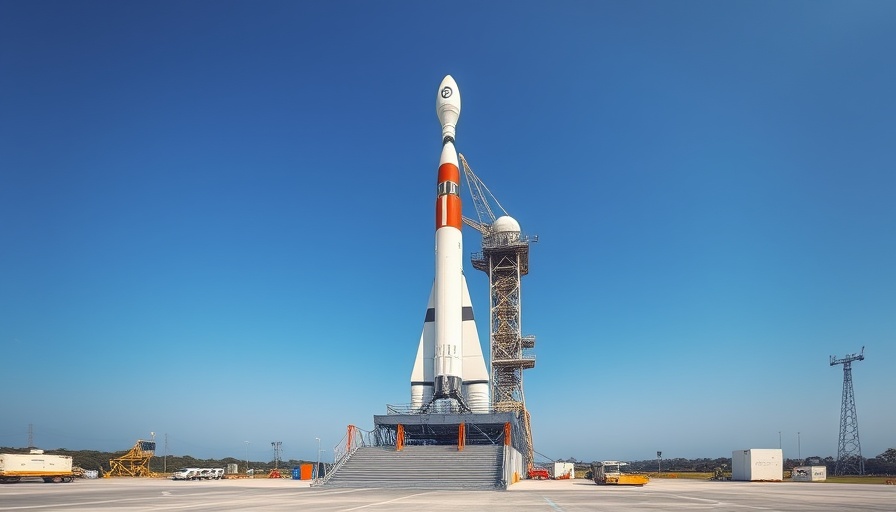
Indian space agency rocket on launch pad, mission setup.

Indian Satellite Launch Faces Setback

On May 17, 2025, the Indian Space Research Organization (ISRO) experienced a setback as its launch mission to deploy the EOS-09 Earth observation satellite into orbit failed due to a technical issue with the PSLV-C61 launch vehicle. According to ISRO chief V. Narayanan, the failure occurred during the third stage of flight when there was a drop in the chamber pressure of the motor case, resulting in the mission not being accomplished.

The Journey of Indian Space Exploration

ISRO has a rich history in space exploration, marked by numerous achievements since its inception in the 1960s. India gained worldwide recognition when it successfully placed a spacecraft, Mars Orbiter Mission (Mangalyaan), into orbit around Mars in 2014. This remarkable feat signified India's growing prowess in space technology, showcasing its capability to conduct missions that both advance scientific understanding and enhance national pride.

Regaining Momentum After Previous Challenges

Following a failed attempt to land on the moon in 2019, India made a triumphant return by becoming the first nation to effectively land a spacecraft near the moon's south pole in 2023. This historic mission explored uncharted territories, prompting hopes of discovering frozen water reserves that could support future lunar missions. Despite the recent setback, the continuous endeavors of ISRO demonstrate resilience and a commitment to overcoming challenges in the pursuit of advances in aerospace technology.

The Importance of Learning from Setbacks

While every failure in the realm of space exploration can be disheartening, it also presents an opportunity to learn and improve. The challenges faced during the PSLV-C61 mission will undoubtedly lead to analyses that strengthen future missions. Engineering teams will review and iterate designs to ensure better performance in subsequent launches. The iterative nature of technology development is vital for progress, as each mission contributes valuable insights, whether successful or not.

Looking Ahead: The Future of Indian Space Missions

As India’s space program continues to evolve, plans for upcoming missions include more sophisticated satellites and potentially manned missions. The enthusiasm surrounding space exploration in India is palpable, and the public eagerly anticipates further advancements. India aims to broaden its reach beyond Earth observation to explore astrobiology and the limits of our solar system—initiatives that could redefine national and global understanding of space.

Conclusion: The Drive Towards Innovation

The EOS-09 mission serves as a reminder of the unpredictable nature of space endeavors. Despite setbacks, ISRO’s track record showcases the determination to push boundaries and explore the cosmos. Each mission builds upon the last, driving innovation and inspiring future generations. For enthusiasts and professionals alike, the message is clear: resilience in face of challenges paves the way for groundbreaking exploration and discovery.

Space & Aerospace Tech

3 Views

0 Comments

Write A Comment

*
*
Related Posts All Posts
12.14.2025

Georgia's Tumultuous Path: Finding Stability Between NATO and Russia

Update A New Chapter for Georgia: Navigating Between NATO and Russia Georgia stands at a crucial crossroads, finding itself caught between the strong military alliance of NATO and the looming presence of Russia. This geopolitical tension is not just a matter of politics; it has deep implications for regional security and economies. As the region's dynamics shift, Georgia is increasingly turning its attention toward the South Caucasus in hopes of solidifying its position. The South Caucasus as a Strategic Ally Located at the junction of Europe and Asia, Georgia is strategically significant for both NATO and Russia. The South Caucasus offers a promising subset of partnerships that could bolster Georgia’s aspirations for security and economic development. By engaging with neighboring countries such as Azerbaijan and Armenia, Georgia can enhance its influence and stability in the region. Emerging Trends in Defence and Aerospace The focus on regional alliances in Georgia has implications beyond just geopolitics. The aerospace and defence sectors are gaining momentum as Georgia seeks to enhance its military strength and technological capabilities. Collaborations in these fields could lead to advancements in national security, making Georgia a key player in aerospace developments in the South Caucasus. Future Predictions: What Lies Ahead for Georgia? As Georgia looks towards the South Caucasus, experts predict that this shift could redefine its role in international relations. With potential investments in defence technologies and aerospace initiatives, Georgia may emerge as not only a regional stabilizer but also as an innovator in these critical sectors. This proactive approach could shape a future where Georgia balances its alliances more effectively, fostering stability and growth.

12.14.2025

SpaceX IPO Buzz: Why Investors are Eager for This Unique Space Opportunity

Update Elon Musk's Ambitious Vision for SpaceX SpaceX, founded by Elon Musk over two decades ago, is gearing up for a historic initial public offering (IPO) that could raise more than $30 billion, potentially marking it as the largest IPO in history. As the aerospace industry booms—projected to triple in size by 2035—SpaceX's unique position, particularly its innovative reusability of rockets and vast satellite constellation via Starlink, makes it an enticing opportunity for investors. But why is an IPO now on Musk’s agenda? The Space Industry's Growth and Investment Potential The global space industry was valued at around $630 billion in 2023. Analysts suggest this figure could reach an astounding $2 trillion by 2035 due to advancements in technology and increased interest in commercial space travel and satellite internet services. According to McKinsey and the World Economic Forum, SpaceX stands at the forefront of this revolution, emphasizing that investing in such a pioneering company like SpaceX could prove highly lucrative. What Changes Will an IPO Bring? Going public means greater scrutiny for SpaceX, requiring the company to disclose its revenue—a shift from its practice of operating with less transparency. This necessary adjustment may challenge the company’s high-risk, high-reward culture characterized by frequent prototype launches and experimental approaches. The risk is that such a change could stifle innovation, a concern expressed by Mason Peck, an astronautical engineering professor. However, some experts believe that the influence of Musk may prevent SpaceX from becoming overly conservative. Investor Sentiment: The Buzz Around SpaceX The excitement surrounding SpaceX’s IPO is palpable. The possibility of a valuation soaring to $1.5 trillion positions it alongside industry giants. This even outpaces the valuations of companies like OpenAI, which recently set records on the market. Investors seem eager to back innovations, particularly those spearheaded by a charismatic leader such as Musk. Still, as many consider jumping on board, the key question remains: will investors embrace this mix of controversy and innovation? Conclusion: The Future of Space Exploration and Investment The upcoming IPO offers a unique glimpse into the future of space exploration and investment coupled with significant implications for the tech industry at large. With Elon Musk’s drive to colonize Mars and the potential for countless technological advancements, this is more than just an investment opportunity; it’s a chance to be part of humanity's next great leap. The world watches closely as these developments unfold, eager to see how SpaceX navigates its public debut. This enigmatic venture may redefine not only how we explore space but also how we finance tomorrow's innovations.

12.13.2025

Why the Deployment of U.S. Navy Supercarriers Matters for the Indo-Pacific

Update The Strategic Importance of U.S. Navy Supercarriers in the Indo-PacificThe deployment of two U.S. Navy supercarriers, the USS George Washington (CVN-73) and USS Abraham Lincoln (CVN-72), in the Western Pacific exemplifies the United States' commitment to maintaining a strong naval presence amidst rising tensions in the region. With China's growing military assertiveness, particularly illustrated by the activities of its aircraft carriers, the positioning of these U.S. naval assets serves as a counterbalance and a demonstration of military readiness and strategic diplomacy.Building Partnerships in the RegionBoth supercarriers have engaged in joint exercises with allied forces, including the Australian-led Talisman Sabre 2025. This strengthens bonds among U.S. allies and enhances operational capabilities in a critical area that sees significant geopolitical competition. As Rear Adm. Todd Whalen articulated, the U.S. Navy's presence signifies a commitment to a free and open Indo-Pacific, an essential message not just to allies, but also to potential adversaries.Historical Context of U.S. Naval DeploymentThe U.S. Navy's relationship with Japan dates back to the aftermath of World War II, and continuously evolved over the decades. The forward-deployment of aircraft carriers like the USS George Washington marks a historic return after a complex midlife refueling and overhaul. This is not just a display of military might; it embodies a long-standing strategy aimed at ensuring stability in a region marked by historical tensions and contemporary challenges such as the North Korean threat and the aggressive posturing of China's Navy.The Cold Calculations Behind Military ManeuversThe dual carrier presence is strategically timed against a backdrop of increased Chinese naval activity. With Beijing ramping up its military drills and asserting control over contested waters, analysts suggest that the U.S. response is crucial for deterring aggressive maneuvers. The U.S. Navy's capacity to project power across the Pacific, coupled with its partnerships in the region, underpins its strategic objectives and helps shape the security landscape.The Future of Naval Power and SecurityAs military capabilities continue to evolve, with advancements such as the fifth-generation F-35 fighter jets deployed on these carriers, the implications of these deployments extend beyond immediate tactical benefits. They signify an era of modern maritime warfare, where the interplay of technology, strategy, and international partnerships will define naval power in the 21st century. The U.S. Navy's significant presence in the Indo-Pacific will undoubtedly continue as it adapts to the changing dynamics of global military strategies.

Terms of Service

Privacy Policy

Core Modal Title

Sorry, no results found

You Might Find These Articles Interesting

T
Please Check Your Email
We Will Be Following Up Shortly
*
*
*