
Revolutionizing Pneumatic Robotics with Advanced State Estimation
Pneumatic artificial muscles (PAMs) offer unique advantages in the realm of soft robotics, primarily due to their lightweight, flexible nature and high power-to-weight ratios. As industries increasingly incorporate these technologies into their systems, the need for precise control becomes paramount. Without accurate estimates of joint states, the efficacy of PAM-driven joints in practical applications is severely diminished.
Combating Nonlinear Challenges through Innovative Frameworks
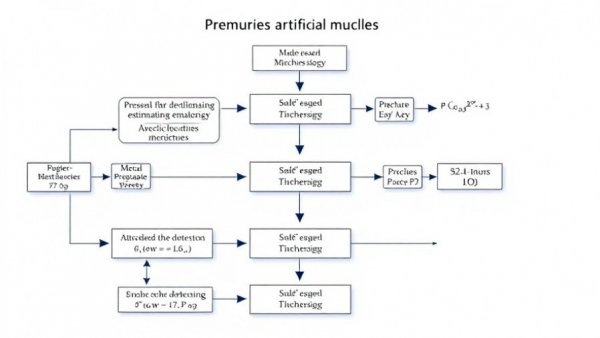
The state estimation for PAM-driven systems poses significant challenges, primarily due to dynamic nonlinearity and hysteresis effects. The conventional unscented Kalman filter (UKF) has proven beneficial in handling nonlinear systems; however, its performance often suffers due to unmodeled dynamics which can lead to substantial inaccuracies. Recognizing these limitations, researchers at the Chinese Academy of Sciences, led by Dr. Li Jun, have developed a hybrid estimation method intertwining a gated recurrent unit (GRU) neural network with the UKF. This innovative approach effectively bridges the gap between model-based and data-driven techniques.
Understanding the GRU-UKF Integration
The newly proposed GRU-UKF method enhances traditional estimation techniques by compensating for dynamic discrepancies using historical system data. By creating dynamic residuals based on previously recorded states, the GRU's predictive capabilities help illuminate the unseen elements affecting system performance. Essentially, it learns from the differences between the predicted states of the UKF and the actual states observed, fine-tuning the overall estimation accuracy.
Technical Implications and Future Potential
This study, published in the IEEE Robotics and Automation Letters, presents a significant leap toward high-precision control in robotic systems utilizing pneumatic actuators. With its foundation on a successful amalgamation of machine learning techniques and robust mathematical models, the GRU-UKF framework stands to pave the way for advanced flexible robotic solutions. Industry applications could extend into healthcare, where dexterous surgical robots require precise maneuverability, as well as in manufacturing sectors striving for improved automation efficiency.
Broader Impact of AI on State Estimation Techniques
The integration of artificial intelligence (AI) into state estimation offers more than just enhanced accuracy; it signifies a shift toward smarter robotics that can better adapt in real-world scenarios. As these technologies become more pervasive, their ability to learn and evolve enhances not only the performance of robots but potentially redefines workflows across sectors. This aligns well with current trends, where AI and machine learning continue to revolutionize how industries operate, generating new standards in automation and efficiency.
Conclusion: Embracing a New Era of Robotics
As we explore the implications of this groundbreaking research, it becomes clear that innovations like the GRU-UKF integration are not just technical achievements—they represent the future of robotics. With AI-driven decision-making capability, these advancements are poised to elevate the efficacy and reliability of robotic systems, fostering a new generation of intelligent machines.




Write A Comment