

The Dawn of the Universe: How Cosmic Simulations Unravel History
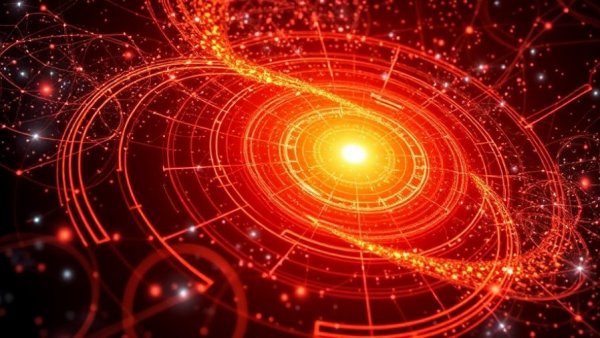
In a groundbreaking advancement in astrophysical research, a supercomputer simulation known as Lumina is shedding light on the universe's infancy. This innovative project, developed by a coalition of researchers at MIT, Harvard, and other institutions, represents a pivotal leap in our understanding of how cosmic structures like galaxies and black holes formed after the Big Bang. By meticulously modeling 2 billion years of cosmic evolution across a vast region of 1.6 billion light-years, Lumina brings to life the dramatic transition from the universe's dark age to a vibrant cosmos.
For centuries, scientists have pondered the mysteries of the universe's early years, a time characterized by obscurity and intrigue. The Big Bang initiated a sequence of events, transforming a hot, dense state into a vast expanse filled with the first elements—primarily hydrogen. Despite the initial potential for luminosity, the atoms remained dormant, cloaking the universe in darkness. The Lumina simulation serves as a time capsule, tracing the evolution of matter and energy from this primordial state, allowing researchers to explore the transitionary periods that shaped the structure we see today.
The Role of Re-ionization: Uncovering Cosmic Transformations
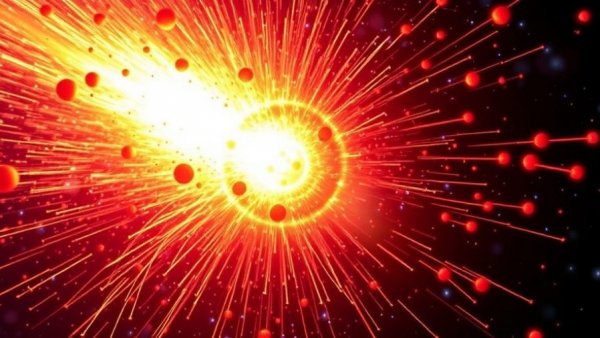
The Lumina simulation reveals pivotal moments of cosmic history, particularly focusing on the processes of hydrogen and helium re-ionization. The simulation tracks how the first stars, through their intense ultraviolet radiation, initiated the re-ionization of hydrogen. Initially, hydrogen gas was neutral and opaque to light, but as these early stars ignited, their radiation began stripping electrons from hydrogen atoms, making the universe more transparent. This profound change not only allowed light to travel greater distances but also set the stage for the formation of intricate cosmic structures.
Adding depth to our understanding, helium re-ionization followed as more massive stars and black holes emerged. This phase saw elements in the universe transforming under extreme conditions, ultimately leading to the bright and diverse galaxy structures we observe today. The luminosity and energy produced during these transformations played a critical role in propelling the universe into its current state, where complex structures can evolve and flourish.
Why Lumina Matters: Bridging Our Past and Future
Understanding our universe's origins is not only a quest to satisfy human curiosity but also a venture into significant scientific implications. The capabilities of Lumina illustrate how advanced computational power—particularly quantum computing—could evolve our approach to studying astrophysics. Current supercomputers utilize classical computational methods, but with the advent of quantum technologies, researchers anticipate a paradigm shift that could lead to even more complex and detailed simulations.
Quantum computing offers a unique advantage by processing vast amounts of data simultaneously, making it plausible for scientists to tackle problems currently beyond reach, such as accurately modeling black hole dynamics or galaxy formation at unprecedented scales. As research progresses, we may witness a future where simulations of cosmic events are as routine as weather forecasting.
The Broader Impact of Cosmic Discovery
The implications of understanding cosmic evolution through Lumina extend beyond scientific fields and into various aspects of society. For example, the insights gained from cosmic simulations can enhance fields like astrobiology, helping researchers explore the conditions necessary for life to thrive beyond Earth. By understanding the processes that brought forth stars and planetary systems, scientists can better assess potential habitable environments elsewhere in the universe, thereby informing future explorations and the search for extraterrestrial life.
Furthermore, societal interest in the cosmos often inspires educational initiatives and public outreach. As concepts like dark matter and re-ionization become more accessible through engaging simulations, they can ignite curiosity in young minds, promoting interest in STEM (Science, Technology, Engineering, and Mathematics) fields. Organizations and institutions involved in these studies often leverage such discoveries to encourage future generations to explore the universe.
Emotional Impacts: Humanity's Cosmic Connection
The study of the universe evokes a deep sense of connection and wonder. For many, pondering the origins of stars and galaxies is akin to contemplating our place within the cosmos. It sparks inspirations about life, existence, and the very fabric of reality. The insights gleaned from Lumina not only enrich our scientific knowledge but also touch the emotional and philosophical chords of what it means to be part of this vast universe. Such exploration often leads individuals to reflect on their existence and the interconnectedness of all matter within the cosmic tapestry.
Practical Insights: What Can We Learn from Our Beginning?
As we delve into the cosmic narrative revealed through Lumina, we glean practical insights relevant to contemporary fields. For instance, understanding how simple elements form complex structures can inspire innovations in material science, with potential applications in creating new materials or technologies. Moreover, comprehending cosmic dynamics informs our approach to Earth sciences, climate modeling, and even resource management.
The implications extend far beyond the realm of pure science, intertwining with art, culture, and human philosophy. As we continue to explore the secrets of our universe, we simultaneously foster creativity, critical thinking, and the relentless pursuit of knowledge that defines humanity. The pursuit of understanding cosmic history unites diverse intellectual disciplines, illustrating how interconnected our knowledge truly is.
Conclusion: Join the Journey of Discovery
The extraordinary findings from Lumina are just the beginning of our journey to understand the universe. As we move forward, the potential of quantum computing and its implications for future simulations will redefine what we deem possible in astrophysical research. The evolving narrative of our universe beckons us all to engage in its discovery—the adventure is just starting, and your curiosity plays a crucial part in this grand exploration. By staying informed and involved, we can participate in the unfolding tale of our cosmic heritage and contribute to future advancements in our understanding of the universe.


Write A Comment