
Add Row
Add Element
AiTechDigest
update
AI Tech Digest
AiTechDigest
update
Add Element
  • Home
  • Categories
    • AI & Machine Learning
    • Future Technologies
    • Tech Industry News
    • Robotics & Automation
    • Quantum Computing
    • Cybersecurity & Privacy
    • Big Data & Analytics
    • Ethics & AI Policy
    • Gadgets & Consumer Tech
    • Space & Aerospace Tech
  • All Posts
  • AI & Machine Learning
  • Future Technologies
  • Tech Industry News
  • Robotics & Automation
  • Quantum Computing
  • Cybersecurity & Privacy
  • Big Data & Analytics
  • Ethics & AI Policy
  • Gadgets & Consumer Tech
  • Space & Aerospace Tech
June 22.2025
2 Minutes Read

Discover the Affordable Innovation of the Hommkiety Galaxy Projector

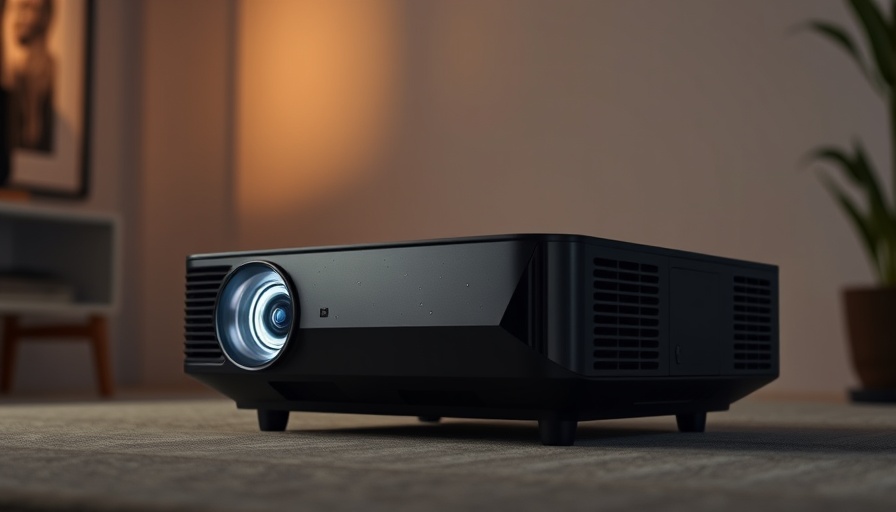
Hommkiety Galaxy Projector displayed for review.

Exploring the Potential of the Hommkiety Galaxy Projector

The Hommkiety Galaxy Projector has emerged as a surprising contender in the realm of home projection devices, captivating users with its stunning image quality and versatile design. Unlike many other projectors that often come with inflated price tags, this device offers incredible value, rivaling more expensive models and earning praise from tech enthusiasts and casual users alike.

Why This Projector Stands Out: Design and Build Quality

Upon unboxing, the Hommkiety Galaxy Projector defies expectations set by its unassuming packaging. While other star projectors may look like toys, the build quality of this device feels premium and robust. Measuring 5.33 x 5.51 x 4.65 inches, its compact size still delivers a hefty feel that speaks to its well-crafted interior components. Users appreciate the sleek design that allows for easy angling onto walls or ceilings, giving flexibility in projection and enhancing home decor.

Impressive Features: A Closer Look

The projector comes equipped with ten interchangeable disks that cater to various preferences, allowing users to personalize their cosmic experience. Whether you're looking to create a serene environment for relaxation or a wondrous backdrop for a child's room, the projector meets diverse needs with clarity and charm. Review experts noted that the image quality remains vibrant and beautiful, making it a tough competitor to the Sega Toys Homestar Classic, typically celebrated for its excellence.

A Bargain Buy: Performance vs. Price

At its price point, which is significantly lower than many other similar products, the Hommkiety Galaxy Projector makes a compelling case for budget-conscious consumers. With a clear advantage in image quality, it invites families and individuals alike to experience a component that blends entertainment and education seamlessly. As consumers increasingly seek out innovation without breaking the bank, products like this projector reflect a growing trend where affordability doesn't spell out compromised quality.

Consumer Insights: What Reviewers Are Saying

A common thread among user feedback is the delight in discovering such quality from an unbranded product. The uniqueness of the Hommkiety Galaxy Projector lies in its mystery—while it boasts exceptional features, buyers acknowledge that they are purchasing a product without any brand reputation attached. Experts advise potential buyers to remain cautious, recalling that similar devices sold under different names may not deliver the same experience. Despite this risk, consumers report an overwhelmingly positive experience that far outweighs any concerns.

Conclusion: Is the Hommkiety Galaxy Projector Right for You?

If you're searching for an affordable yet remarkably effective star projector that appeals to both children and adults, the Hommkiety Galaxy Projector is undoubtedly worth considering. It combines value, performance, and an engaging design, creating an enticing package for those interested in enhancing their living spaces with a touch of celestial magic.

As you explore options for creating atmospheric settings in your home, consider the Hommkiety Galaxy Projector and how it may ignite your imagination and offer entertainment for all ages.

Future Technologies

3 Views

0 Comments

Write A Comment

*
*
Related Posts All Posts
12.14.2025

SpaceX Celebrates Milestone with 550th Falcon 9 Rocket Landing and Starlink Launch

Update The Milestone of Spaceship Recovery: SpaceX's 550th Falcon 9 Landing On December 14, 2025, SpaceX achieved a remarkable milestone by recovering its 550th Falcon 9 booster, marking ten years since its inaugural successful rocket stage landing. This recent touchdown followed the rocket's launch of 27 Starlink satellites from the Vandenberg Space Force Base, demonstrating SpaceX's continuous advancements in space technology and satellite deployment. Innovation in Spaceflight: Falcon 9’s Journey The specific Falcon 9 booster, designated B1093, has now completed its ninth journey to space and back. Unlike the company's first landing, which occurred nine years ago back on land, the booster successfully landed on the drone ship "Of Course I Still Love You" stationed in the Pacific Ocean. This innovative approach to recovery improves efficiency and reusability, reinforcing the company's mission to reduce costs associated with space launches. The Growing Starlink Megaconstellation With the latest launch, the Starlink constellation has surpassed 9,300 active satellites out of more than 10,000 that have been dispatched since 2019. This increasing number paves the way for expanded broadband internet service worldwide. Starlink is already making significant strides, providing internet access to underserved regions, enabling WiFi on commercial airplanes, and strengthening connectivity through cell-to-satellite capabilities. SpaceX’s Impact on the Future of Connectivity The addition of satellites from the recent mission aids in expanding global internet reach, particularly in rural areas that lacked reliable service. This innovation opens doors to economic growth, education, and communication. As more satellites are launched and established, the implications of Starlink grow, stirring discussions about the future of space-based internet services. The Response to Public Concerns: Space Debris and Astronomy While the advancements in satellite launches are momentous, they also raise concerns regarding space debris and its impact on astronomical observations. Recent studies have indicated the potential jeopardy posed by megaconstellations like Starlink to ongoing scientific research, urging the industry to find a balance between innovation and the preservation of the cosmos for astronomical studies. Towards a New Era of Space Exploration and Internet Connectivity The ongoing progress marked by SpaceX emphasizes the significance of innovation in space technology. As these advancements continue at an unprecedented pace, the implications for various industries—including telecommunications, utility services, and even education—will reshape how we access and share information. The future promises exciting developments, with SpaceX at the forefront of this transformation.

12.13.2025

Navigating the Future of Space: How Uncoordinated Launches May Threaten Satellites

Update When Close Calls Become Commonplace in Space A recent incident involving a satellite launched by a Chinese rocket has raised alarms in the aerospace community. On December 9, 2025, a Kinetica 1 rocket lifted off from the Jiuquan Satellite Launch Center, carrying nine new satellites into orbit. However, one of these satellites came alarmingly close to colliding with SpaceX's Starlink satellite, designated STARLINK-6079, which operates at an altitude of approximately 560 km. SpaceX's vice president of Starlink engineering, Michael Nicolls, stated that the incident occurred due to a lack of coordination between the satellite operators. With the surge in satellite technology, understanding orbital dynamics and ensuring safe distances between spacecraft is becoming increasingly crucial. Just five years ago, there were fewer than 3,400 functioning satellites orbiting Earth—a number that has ballooned to around 13,000 today, according to available data. This rapid increase significantly heightens the risks of collision, as highlighted in Nicolls' statements. The Consequences of Uncoordinated Space Operations The lack of necessary deconfliction between satellite launches is troubling. While SpaceX operates nearly 9,300 Starlink satellites, the coordination practices of other companies remain inconsistent. Although CAS Space, the operator of the Kinetica 1, claimed to have adhered to mandatory procedures for avoiding collisions, the incident is indicative of a larger systemic issue in space operations. Collisions in space can be catastrophic, leading to what is known as the Kessler syndrome, where a single event can trigger a cascade of collisions creating debris fields. This scenario could ultimately render certain orbits unusable, significantly impacting global satellite operations and communications. Autonomous Maneuvers: A Potential Lifesaver Despite the challenges posed by increasing satellite traffic, SpaceX has developed autonomous systems that allow its Starlink satellites to execute evasive maneuvers autonomously. In 2025 alone, SpaceX’s fleet conducted approximately 145,000 avoidance maneuvers, averaging four maneuvers per satellite per month. This impressive operational capacity minimizes collision risk, yet the reliance on these systems could lead operators to become complacent about overall coordination. The technological advancements in autonomous navigation signify a promising step forward but also underscore the necessity for improved communication between the numerous parties involved in satellite deployment and management. As more countries enter the field of aerospace technology, the margin for error becomes smaller. Regulatory Implications for the Future The clear take-home from this event is the urgent need for enhanced regulatory frameworks that govern satellite launches. A structured approach to sharing orbital data would provide necessary transparency and significantly mitigate the risks of collisions. With more satellite operators emerging globally, a cohesive set of guidelines is essential in ensuring the safe coexistence of diverse systems. International cooperation in space governance could facilitate the exchange of critical information and better define operational boundaries, hence preventing future incidents like the one experienced with the Kinetica 1 launch. For enthusiasts and concerned citizens alike, understanding these dynamics is vital as space exploration continues to evolve. It is not only a testament to technological prowess but also poses ethical questions regarding our responsibilities in shared spaces. In conclusion, as the race for innovation in space technology accelerates, collaborative coordination among all satellite operators becomes imperative. Engaging in constructive dialogue toward a sustainable orbital environment is essential for the future of global communications and explorations.

12.13.2025

Discover the New Canine Stem Cell Medium Without Human Components

Update Revolutionizing Canine Healthcare: A New Era for Stem Cell Research The landscape of canine healthcare is experiencing a significant transformation, thanks to groundbreaking advancements in stem cell research. A recent study conducted by Osaka Metropolitan University has introduced a novel culture medium for canine induced pluripotent stem (iPS) cells that eliminates the need for human components. This innovation stands to enhance how we understand and treat common diseases affecting our beloved pets, promoting more effective and ethical veterinary practices. Understanding the Challenges with Current Stem Cell Treatments The traditional approach to culturing canine iPS cells often involves using recombinant proteins derived from human sources as culture substrates. While effective in practice, these human elements can trigger immune rejection in canine cells, thereby complicating the potential for clinical applications. As highlighted in previous articles, including the benefits of allogeneic stem cell therapies for pets, the reliance on human components has posed hurdles that researchers have long sought to overcome. How E. Coli is Opening New Doors The innovative study led by graduate student Kohei Shishida and Professor Shingo Hatoya has successfully engineered E. coli bacteria to produce vitronectin (VTN)—a protein native to dogs. This new culture medium not only supports the cultivation of canine iPS cells effectively but also eliminates the risk of cross-species contamination. By introducing canine-specific proteins into the scaffolding structure, researchers have paved the way for safer and more efficient regenerative therapies. Potential Applications of Canine-Specific VTN The implications of using canine-derived VTN are profound. As Professor Hatoya notes, this development brings us closer to applying regenerative medicine to address challenging diseases commonly seen in dogs, including heart conditions and neurological disorders. With veterinary practices already exploring ready-to-use therapies, such as mesenchymal stem cell (MSC) treatments, this new medium aligns with the fast-evolving landscape of veterinary medicine, showcasing a promising future for clinical practice. Future Directions: Enhancing Treatment Options for Pets Looking ahead, the researchers plan to optimize the manufacturing process of VTN, particularly focusing on a mutant form of the protein that promises to function just as effectively as its human-derived counterpart. By improving production techniques, the availability of canine-specific substrates can facilitate greater access to regenerative therapies across veterinary practices, enabling timely interventions for dogs suffering from debilitating conditions. Conclusion: The Shift Towards Ethical Veterinary Practices The introduction of a canine-specific culture medium represents a crucial step forward in the quest for innovative and ethical veterinary treatments. As we continue to explore the capabilities of stem cells in veterinary medicine, such developments highlight the importance of refining our approaches to treatment. The future of canine healthcare is not just about enhancing technology; it's also about fostering a more humane ecosystem for our pets.

Terms of Service

Privacy Policy

Core Modal Title

Sorry, no results found

You Might Find These Articles Interesting

T
Please Check Your Email
We Will Be Following Up Shortly
*
*
*